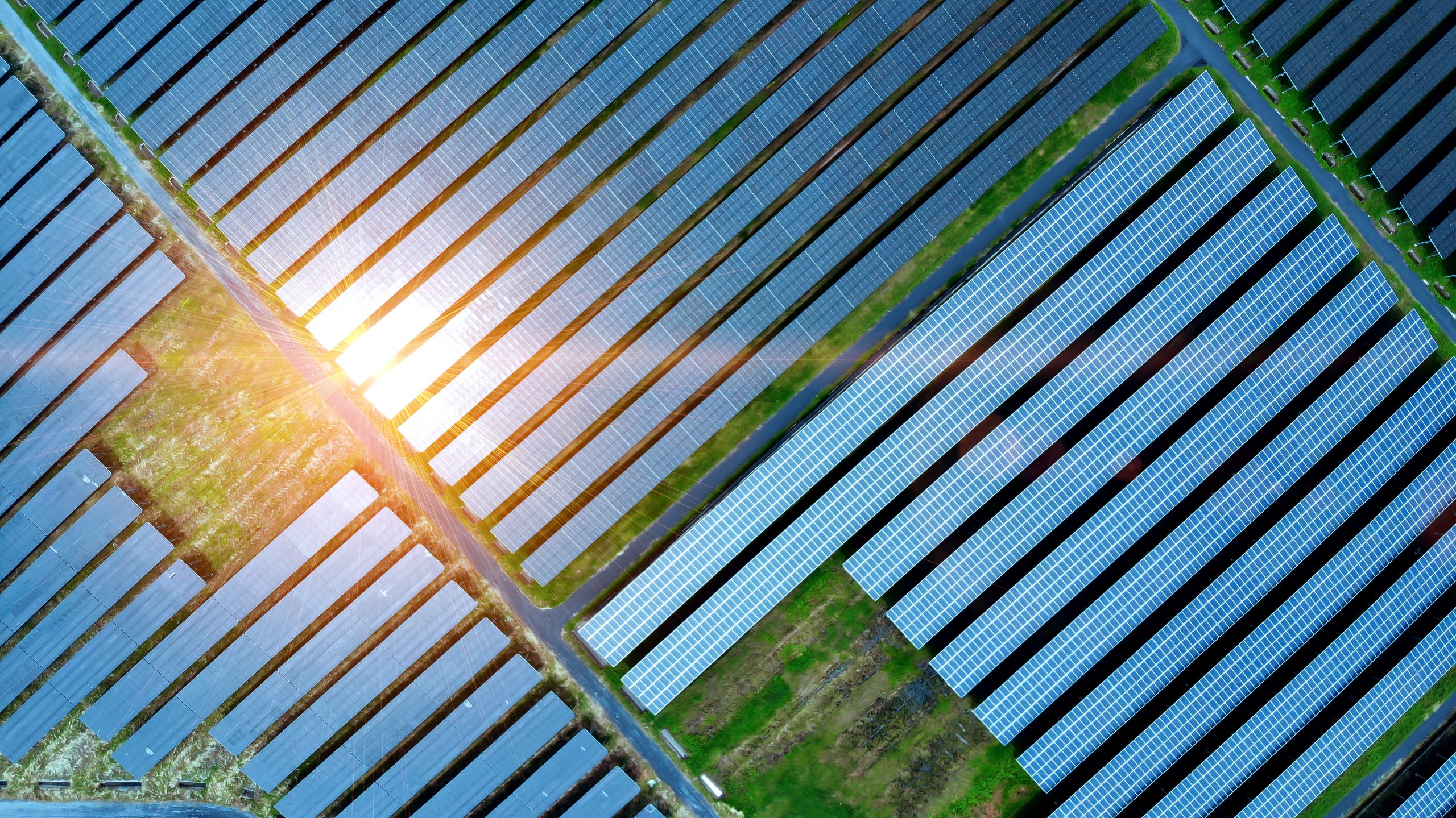
What is Solar Energy Materials & Systems all about?
- Developing sustainable photovoltaic materials and devices for next-generation solar applications.
- Accelerating materials discovery and characterisation through automation and AI-driven methods.
- Bridging lab to fab with scalable thin-film technologies and reliability testing.
- Advancing digital photovoltaics from manufacturing quality control to real-world performance monitoring.
Solar energy materials & systems
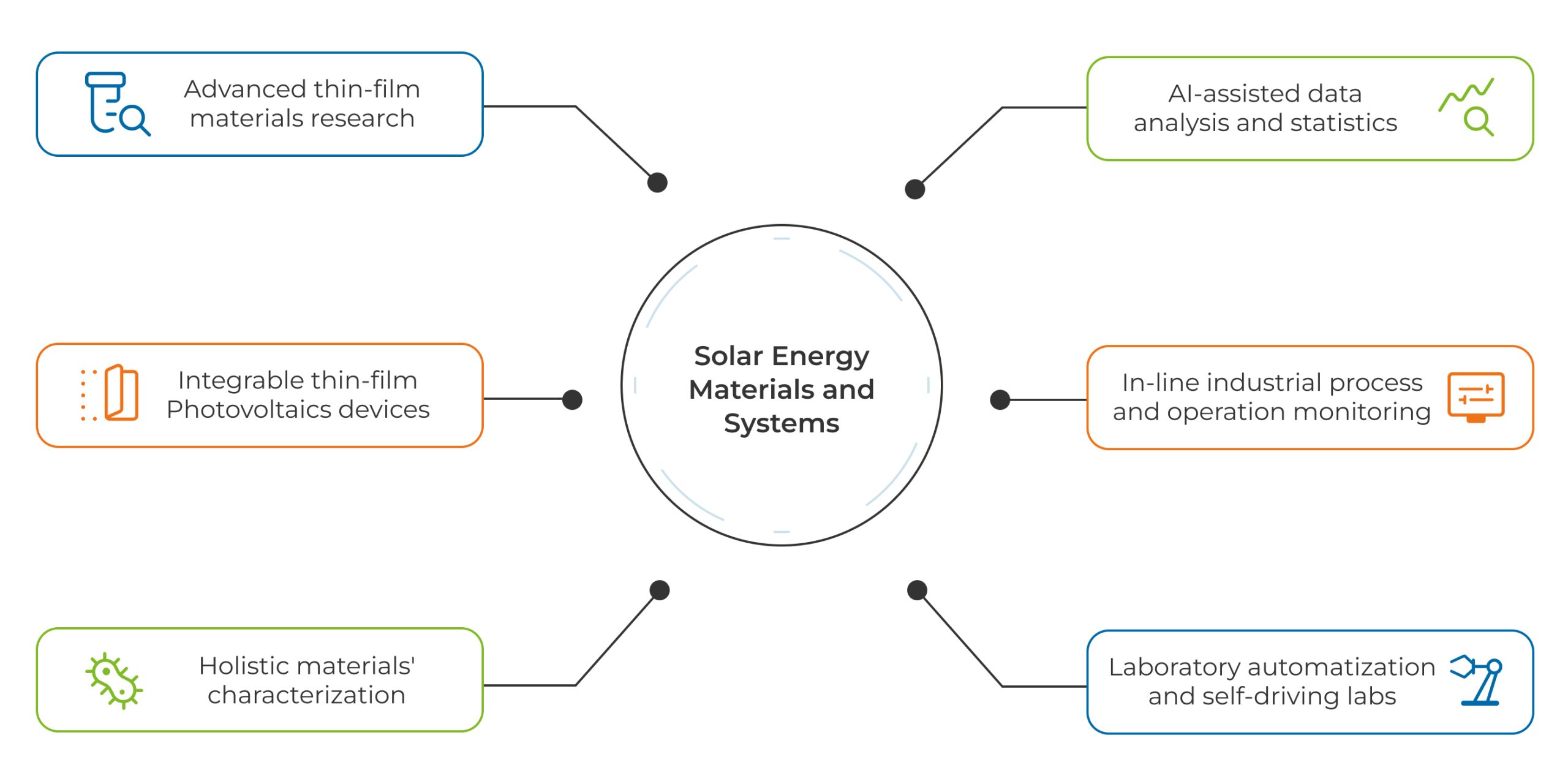
The Solar Energy Materials and Systems department advances the integration of photovoltaics across a broad range of applications (BIPV, APV, PV-IoT, VIPV and beyond) by tackling integrability challenges through novel materials and innovative device architectures. Our strategy spans the full research continuum, from fundamental materials science through to scalable manufacturing and real-world deployment, combining robotics and AI-driven methodologies to accelerate discovery, optimise processes, and enable efficient, seamlessly integrated distributed PV solutions.
Next-Generation High-Integrability PV Technologies
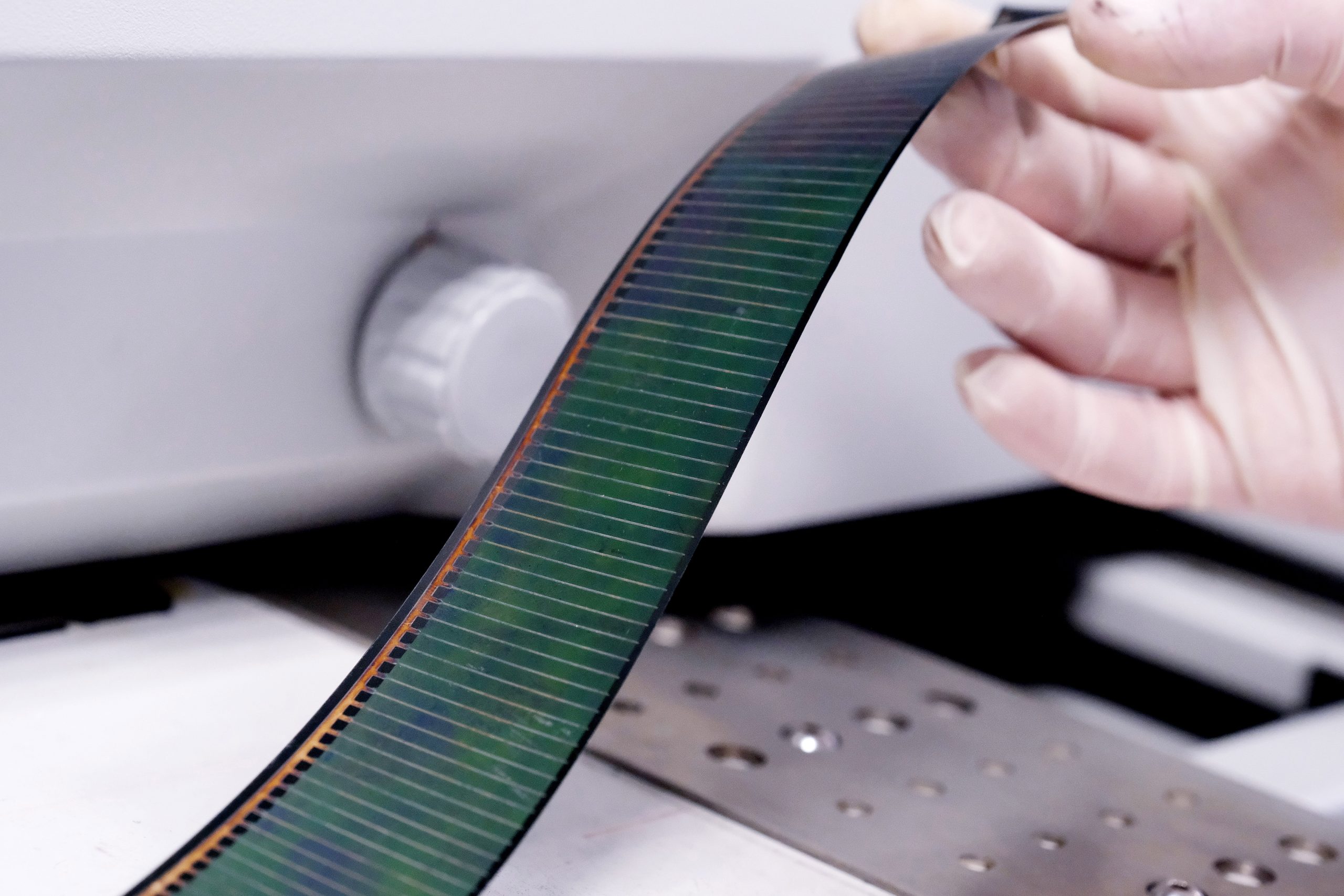
We develop thin-film devices based on sustainable materials, earth-abundant and low-toxicity, tailored to applications requiring transparency, flexibility and lightweight form factors. Our work scales from initial lab concepts to 10×10 cm² prototypes, delivering deployable PV solutions.
Holistic AI-Driven Materials and Device Characterization
We combine multimodal characterization, spectroscopic, imaging and electrical, with explainable AI (XAI) to uncover process–structure–property relationships in complex PV systems, accelerating optimisation and informing device design.
From Lab to Manufacturing and Operational Monitoring
We develop automated sensing platforms and digital tools for in-line quality control and real-time monitoring, supporting zero-defect manufacturing and enhancing performance across the full PV lifecycle.
Self-Driving Labs and Research Robotization
We develop closed-loop autonomous platforms integrating robotic synthesis, characterisation and AI (XAI) to accelerate thin-film materials discovery through reproducible, data-driven experimentation.
Our activity at a glance
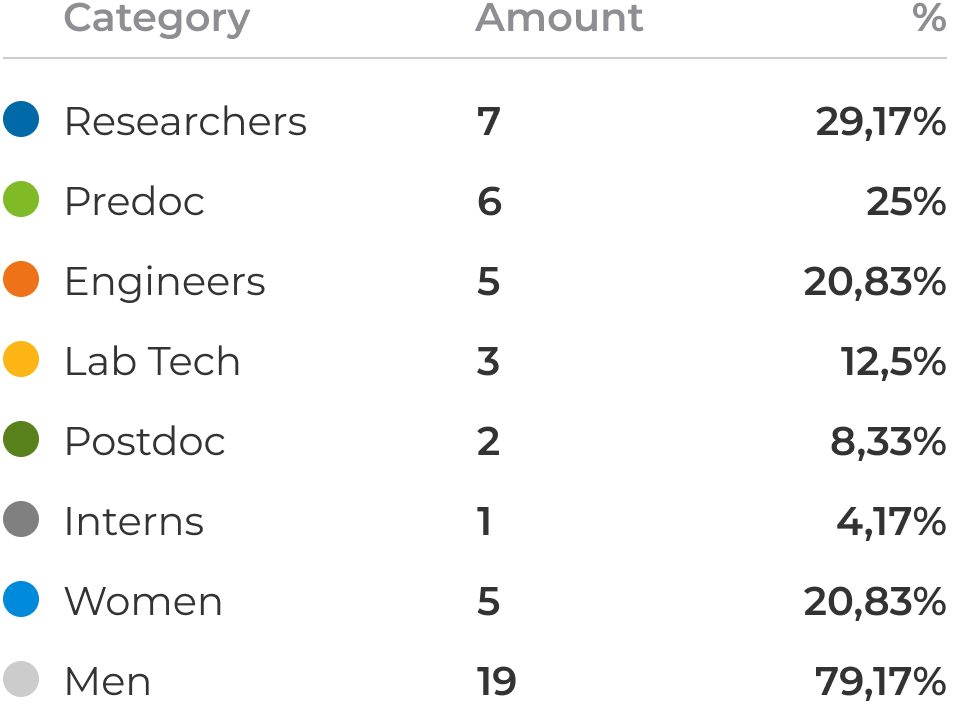
The department brings together a multidisciplinary team of researchers and specialists working across its core research areas. Our work combines fundamental research, technology development and applied validation, engaging with academic institutions, industry partners and public bodies to generate knowledge and solutions with real-world impact.
A department expert team

Our research lines
Research lines
- Solar Energy Materials and Devices (SEMS-Dev)
- Materials and Devices Characterisation (SEMS-Char)
- Industrial Process and PV Systems Monitoring (SEMS-Mon)
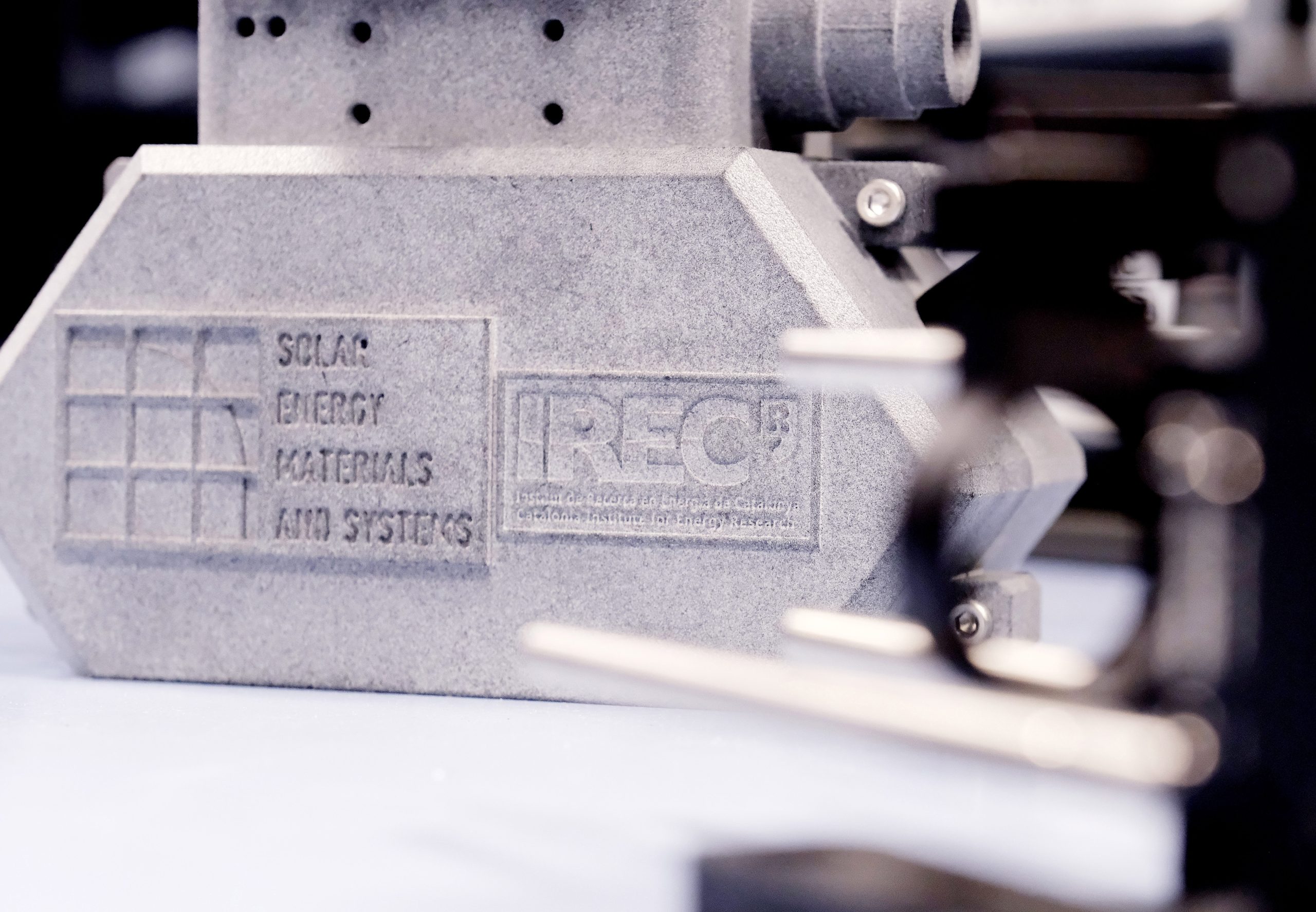
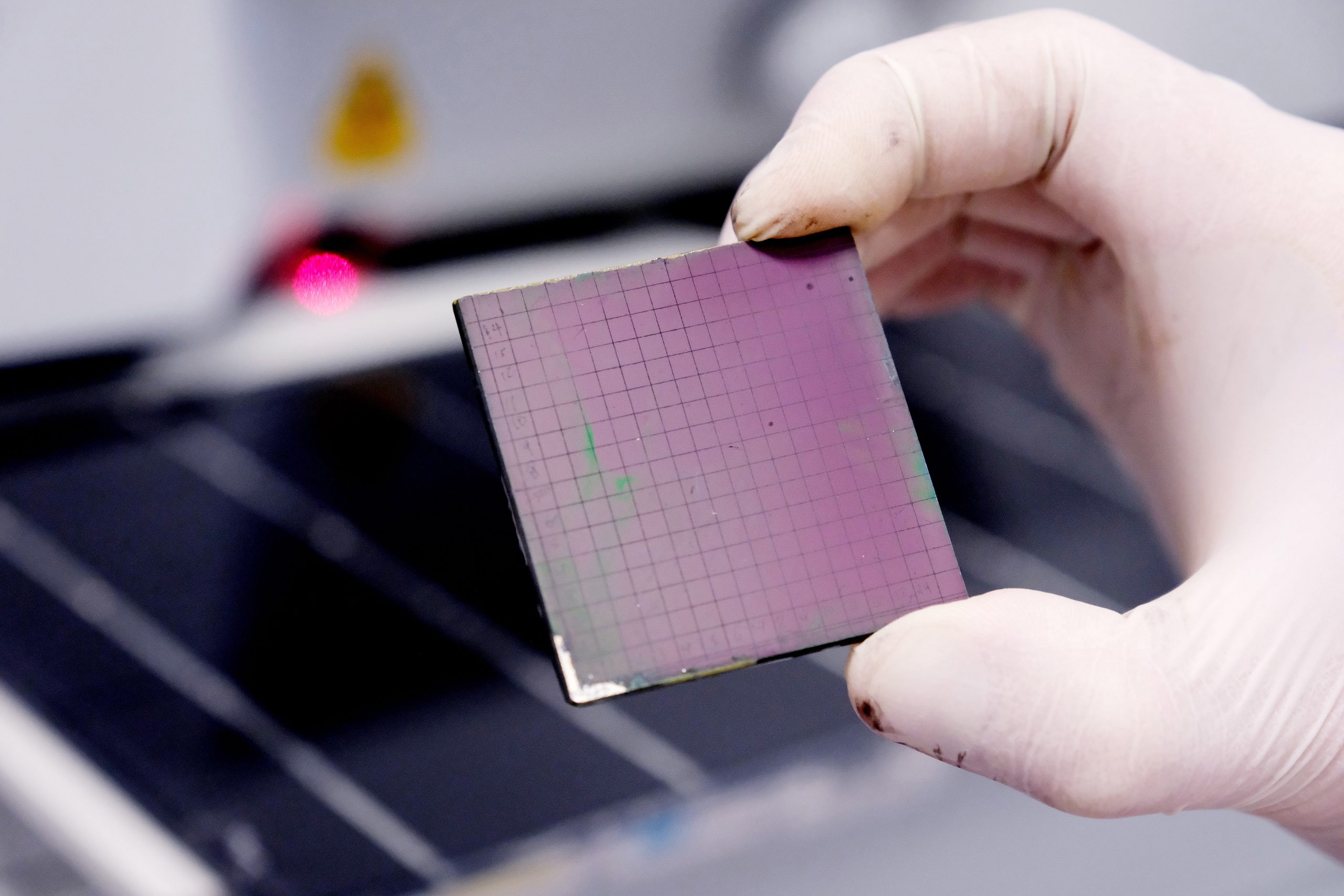
Solar Energy Materials and Devices (SEMS-Dev) investigates materials, layers and device architectures for inorganic thin-film technologies, with a focus on integrable PV applications such as BIPV, APV and PV-IoT. We work with complex material systems including kesterites, Sb₂S₃, Zn(O,S) and a-Si:H, developing device architectures and processes that prioritise sustainability and adaptability, addressing transparency, flexibility and lightweight form factors. Our work progresses from fundamental research to scalable prototypes of up to 10×10 cm² on diverse substrates, including glass and steel.
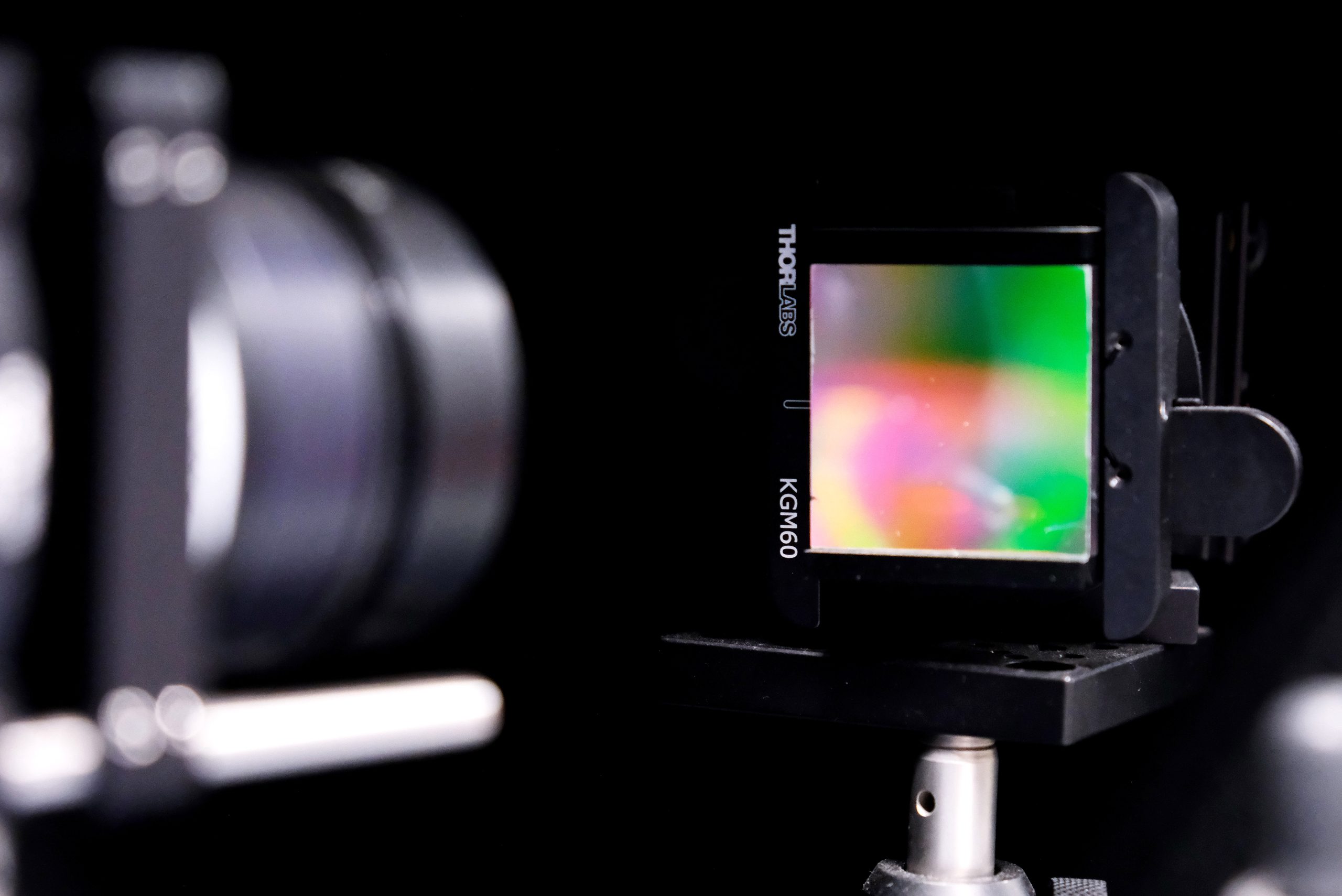
Materials and Devices Characterisation (SEMS-Char) develops advanced multimodal characterisation methodologies to elucidate process–structure–property–performance relationships in thin-film technologies. We combine spectroscopic, imaging and electrical techniques with explainable AI (XAI) analysis to build a comprehensive understanding of the system, enabling multidimensional analysis and system-level modelling. Our approach transforms complex datasets into meaningful insights, deepening technology understanding and accelerating development from fundamental device physics through to real-world operation.
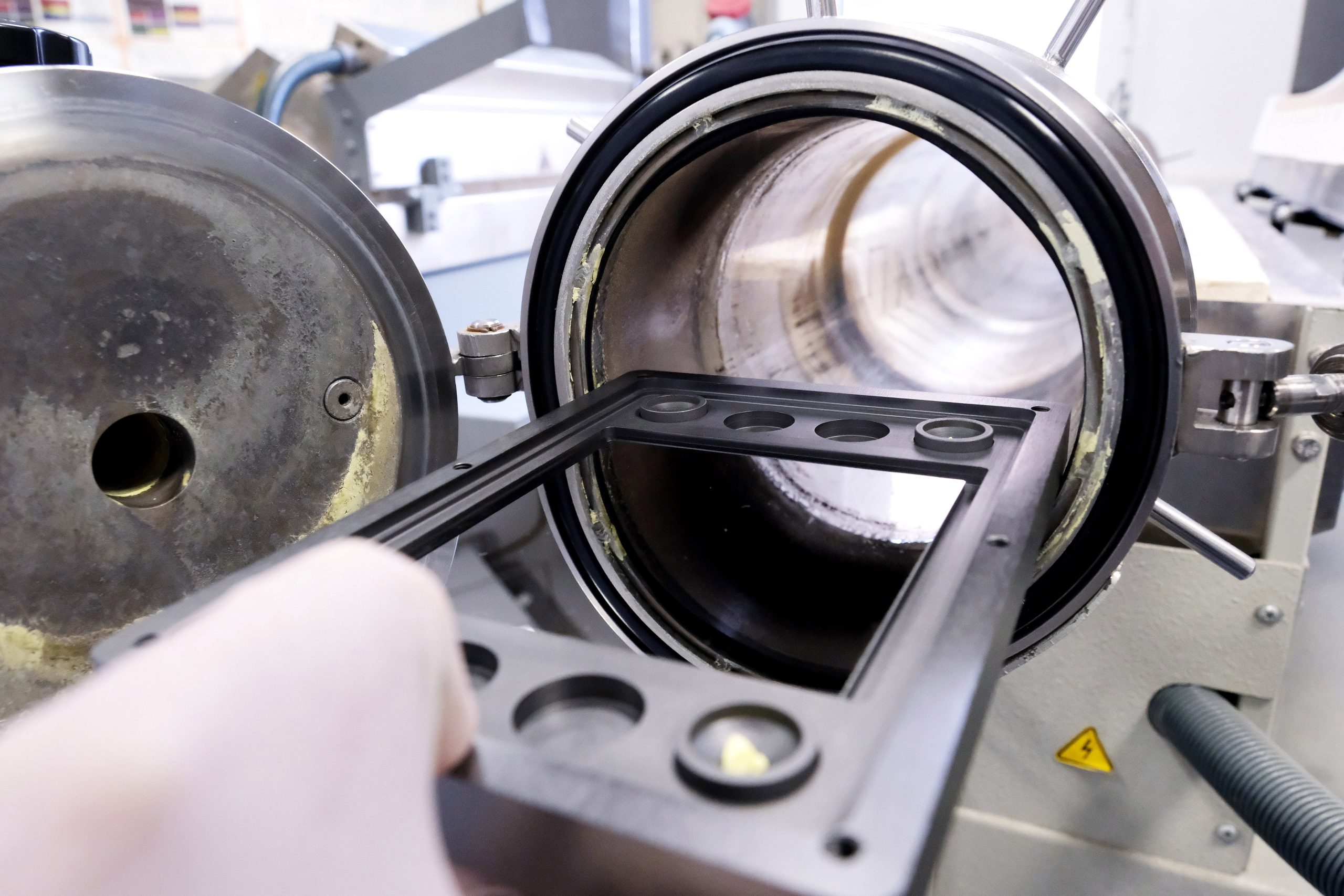
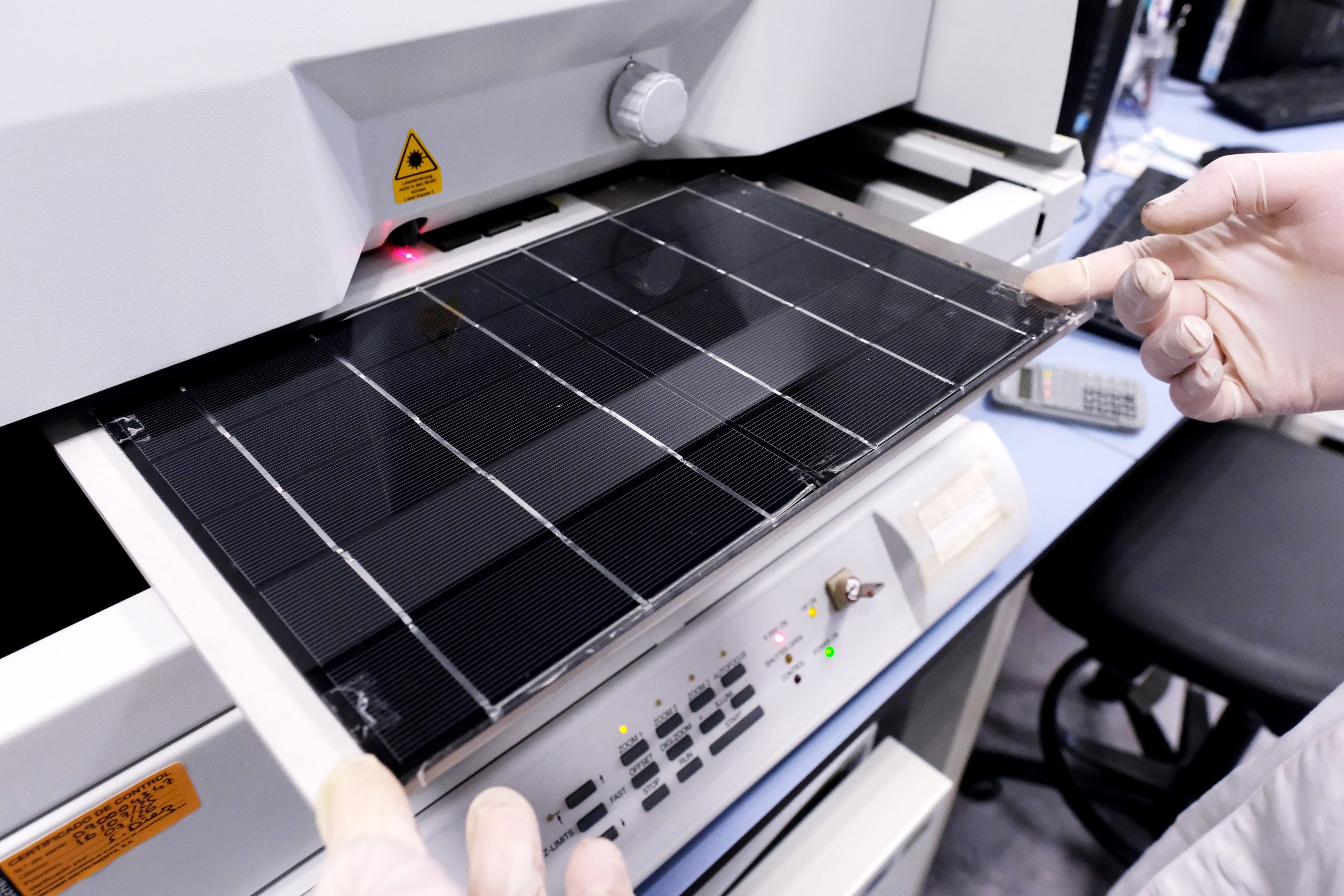
The Process and PV Systems Monitoring (SEMS-Mon) group develops digital and automated solutions for the synthesis, monitoring and operational evaluation of materials, layers and devices. We design customisable sensing platforms and multisensor metrology tools for comprehensive system inspection. Our approach integrates real-time data acquisition, advanced analytics and artificial intelligence to support the analysis of complex systems, enabling informed decision-making across both research contexts (including self-driving laboratory concepts) and industrial and societal applications.
People
A skilled team dedicated to advancing the energy transition.
Projects
Competitive and industrial projects from lab to real-world scale.
Publications
Peer-reviewed outputs at the forefront of energy research.
Facilities
Facilities
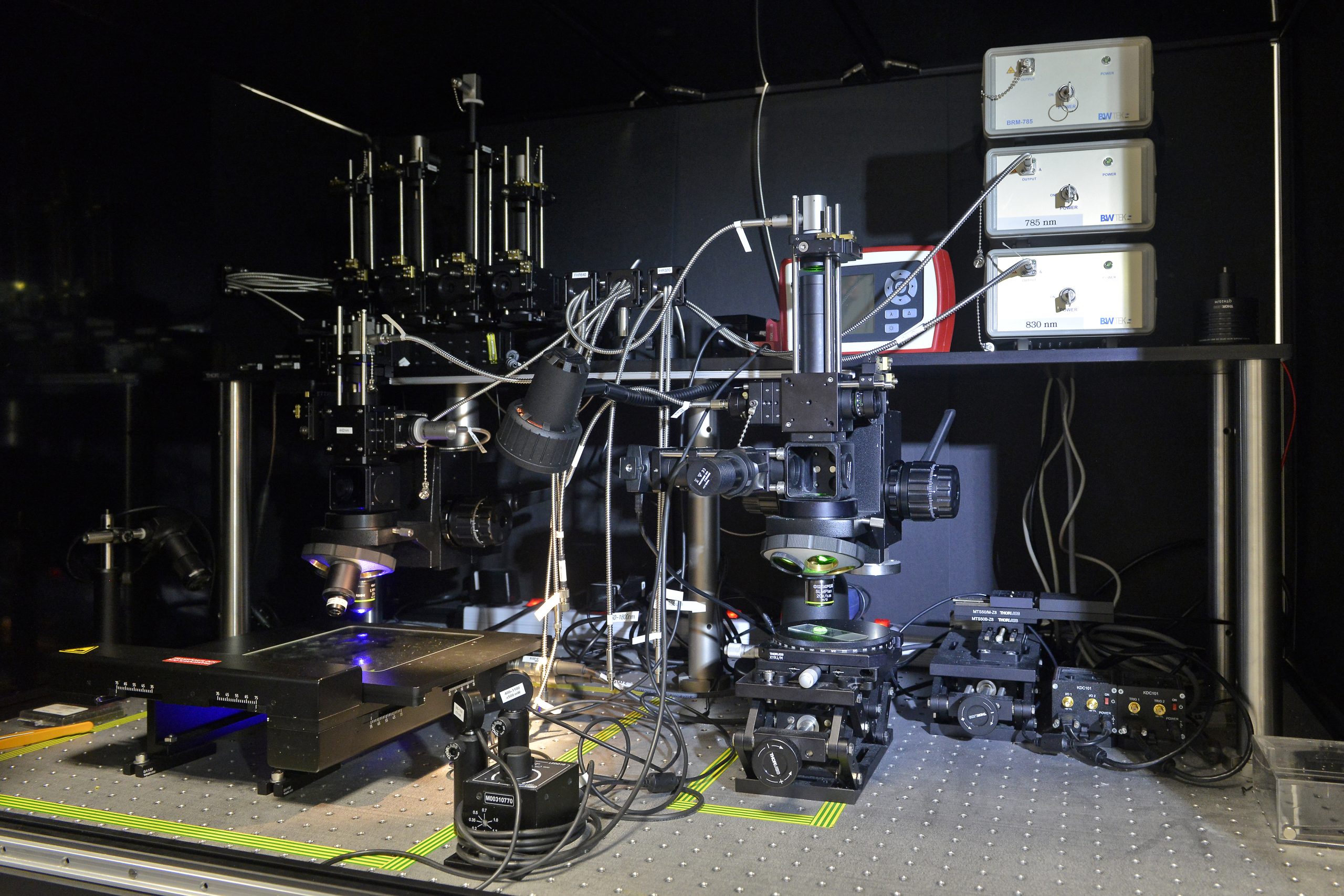
The department maintains infrastructure spanning the full value chain of thin-film technology research: a complete fabrication line for semiconductor device production; a comprehensive characterisation platform integrating spectroscopic, imaging and electrical techniques, augmented by a proprietary AI library; and dedicated platforms for robotised synthesis and characterisation prototyping. The department also incorporates testing and performance evaluation facilities for solar solutions under both indoor and outdoor conditions.
Tech Transfer
The Solar Energy Materials & Systems department drives technology transfer through international collaborations with research institutions and industry, leading projects at European, national and regional levels. Through these initiatives, we develop functional prototypes and demonstrators for the PV sector (including within the Custom-Art and Platform-Zero Horizon Europe projects). Building on the department’s core strengths, we transfer AI-driven automated sensor platforms and advanced metrology tools for in-line process monitoring, supporting zero-defect manufacturing. We also deliver scalable BIPV and agrivoltaic solutions through PV integration into ceramics and the development of bifacial modules. Our outputs include validated demonstrators transferred to industrial partners, two technological pilot lines (PV and nanoproducts), and an active patent portfolio, together providing reliable, deployable clean energy technologies. The SEMS department also contributes to standardisation activities in inspection and metrology.
News
Nullam eu feugiat curabitur non. Maecenas tortor eget nunc nulla arcu auctor tincidunt arcu.
-
GARA closes its fourth edition strengthening energy outreach and fighting misinformation
More than 64,000 people have taken part in Gara-MOVES, the fourth edition of the educational and outreach programme promoted by IREC. The project has ran from July 2025 to June 2026 with a clear objective: to fight misinformation and fake news on the energy transition, renewable energy and climate change through innovative, itinerant and participatory…
Read more: GARA closes its fourth edition strengthening energy outreach and fighting misinformationPablo Fernández Martínez
Vulputate aliquam gravida
-

IREC strengthens international collaboration on the life-cycle impacts through the IEA
IREC has contributed to the recently completed IEA TCP on Electric Vehicles Task 46, a global initiative assessing the full life-cycle environmental impacts of electric trucks, buses, specialised vehicles and V2X services. The project, led by Joanneum Research (Austria), brought together partners from Austria, Canada, Germany, the Netherlands, Norway, the Republic of Korea, Spain, Switzerland, the UK,…
Read more: IREC strengthens international collaboration on the life-cycle impacts through the IEAPablo Fernández Martínez
Vulputate aliquam gravida
-

A plan to adapt schools to climate change was presented today
A report prepared by a group of experts from the climate, health, social and education fields warns about the growing impact of heat in classrooms and states that, from 2030 onwards, there could be up to 65 days during the period school with temperature and humidity conditions that exceed heat index of 27°C — nearly…
Read more: A plan to adapt schools to climate change was presented todayPablo Fernández Martínez
Vulputate aliquam gravida