
What is Energy Storage, Harvesting and Catalysis all about?
- Developing high-performance batteries for grid-scale and distributed energy storage.
- Producing renewable hydrogen and synthetic fuels through solar and electrochemical routes.
- Designing autonomous energy systems integrating harvesting, storage and smart management.
- Modelling reactors and simulating processes to bridge laboratory innovation and pilot scale.
Energy Storage, Harvesting & Catalysis
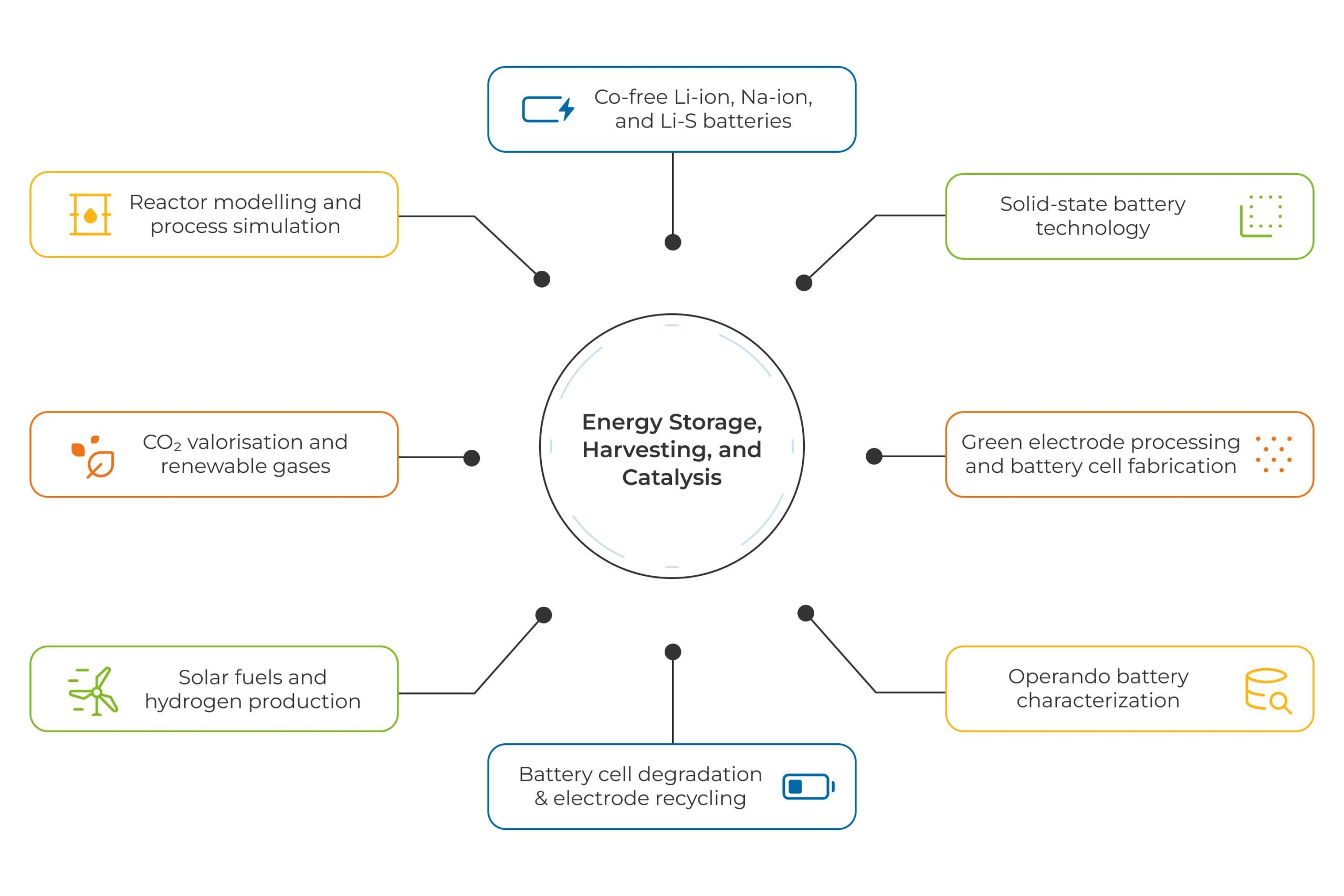
The Energy Storage, Harvesting and Catalysis department investigates materials, processes and systems across electrochemical energy storage, sustainable fuels and autonomous energy management. Our research combines materials synthesis, electrochemistry, catalysis, CO₂ valorisation and reactor engineering, with activities spanning from fundamental materials science through to pilot-scale demonstrators. Working through both competitive and industrial projects, we develop and validate technologies that support the transition to a decarbonised energy system.
Electrochemical Batteries
We develop electrochemical battery technologies spanning redox flow batteries and advanced lithium-based systems, combining materials innovation with cell and stack engineering. Our prototypes are validated under realistic operating conditions, targeting applications in grid-scale storage, industrial energy management and distributed renewable systems.
Sustainable Fuels
We develop solar-driven and electrochemical processes for renewable hydrogen production and CO₂ valorisation, achieving solar-to-hydrogen efficiencies above 18% and solar-to-fuels above 15%. Our research also advances plasma-catalytic and thermoconversion routes for synthetic fuel production, with pilot-scale activities in renewable hydrogen and synthetic methane generation.
Harvesting and Supercapacitors
We design supercapacitors for self-sufficient energy systems, integrating energy harvesting and storage to enable effective energy management in remote and distributed applications where grid connectivity is unavailable or unreliable.
Reactor Modelling and Process Simulation
We develop microfluidic models, reactor engineering tools and process simulations to optimise electrolysers, plasma-catalytic systems and chemical reactors, enabling the transition from laboratory-scale innovation through to pilot-scale implementation.
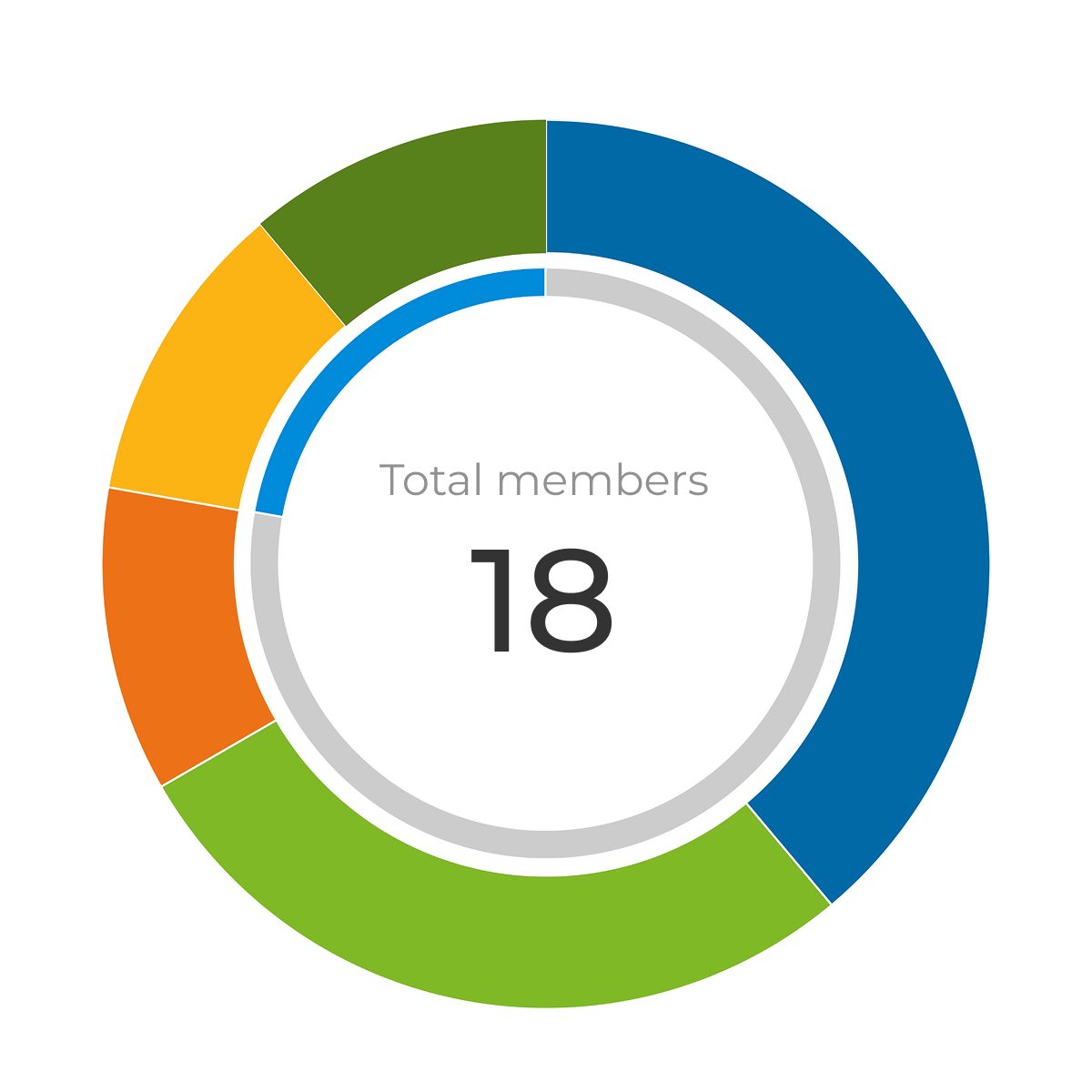
Our activity at a glance
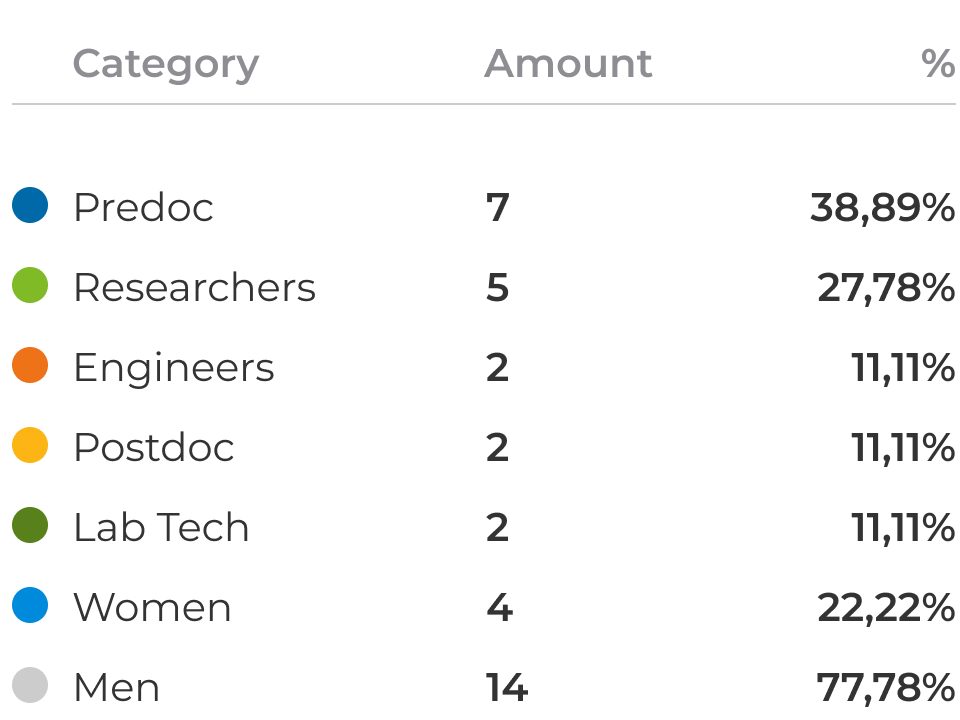
The department brings together a multidisciplinary team of researchers and specialists working across its core research areas. Our work combines fundamental research, technology development and applied validation, engaging with academic institutions, industry partners and public bodies to generate knowledge and solutions with real-world impact.
A department expert team
Our research lines
Research lines
- Battery Materials
- Sustainable Fuels
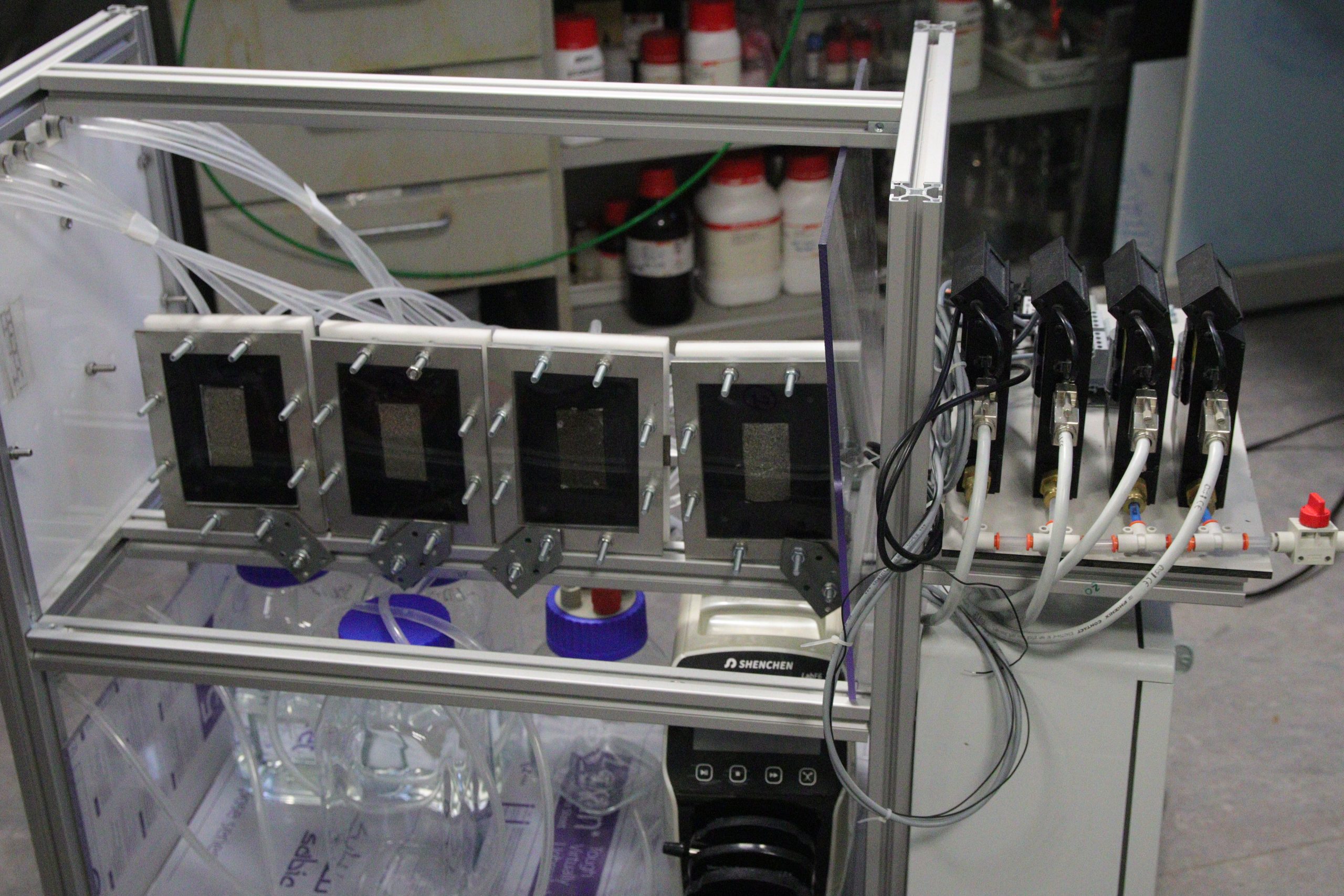
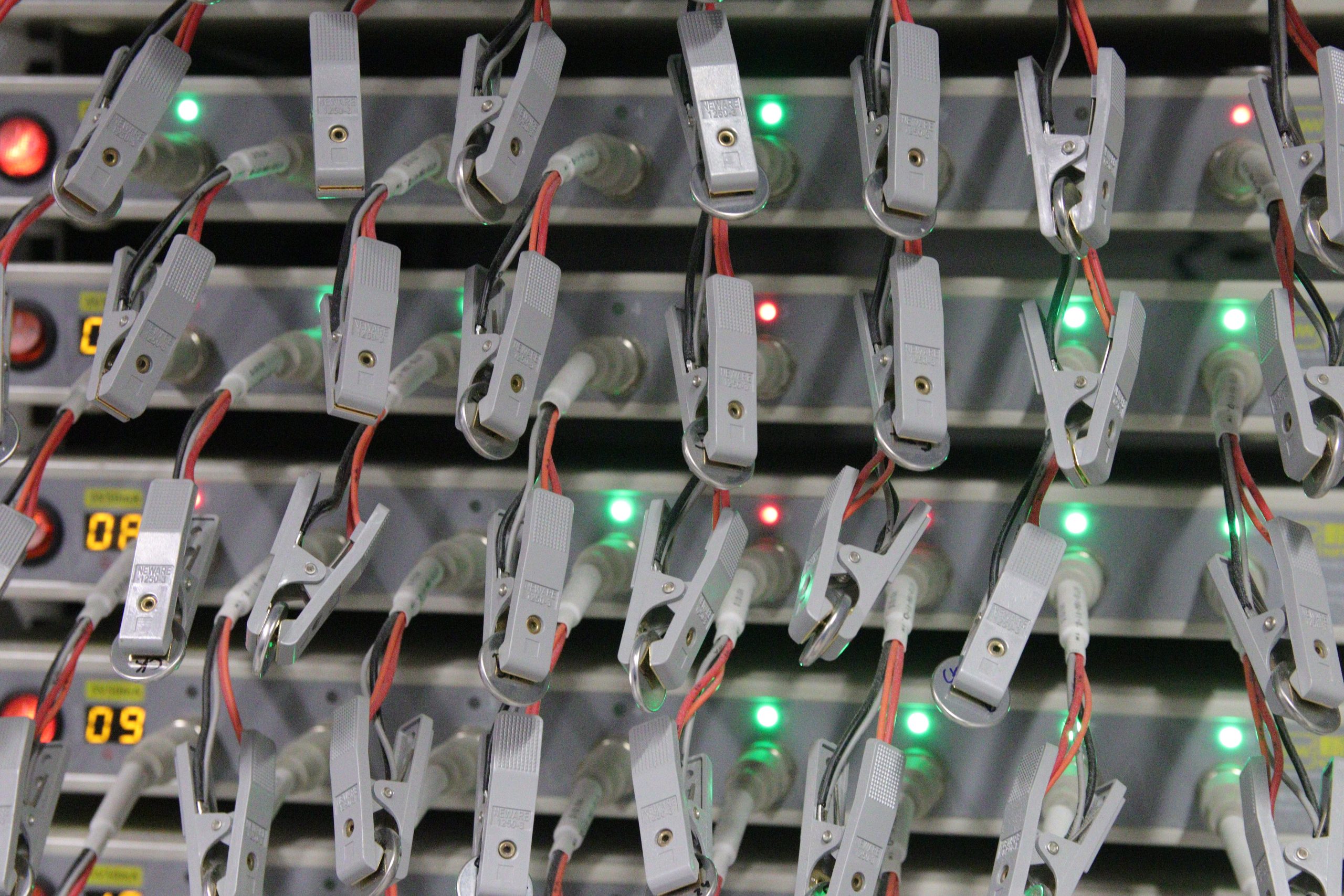
Battery Materials (ESHC-Bat) develops electrochemical energy storage technologies across redox flow batteries and advanced lithium-based systems, including lithium-sulfur chemistries. We combine materials synthesis, electrode engineering and cell design to build competitive prototypes validated at industrially relevant scales. Our work targets applications in grid-scale energy storage, industrial energy management and the integration of distributed renewable generation, contributing to safer, more sustainable and higher-performance storage solutions.
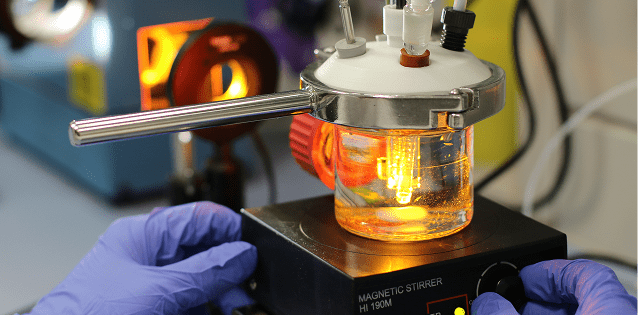
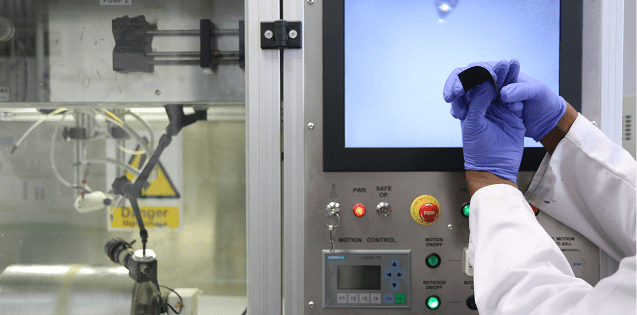
Sustainable Fuels (ESHC-Fuel) develops solar-driven and electrochemical processes for renewable hydrogen production, synthetic methane and CO₂ valorisation. Our research integrates photoelectrochemical and thermochemical conversion routes alongside plasma-catalytic systems, achieving solar-to-hydrogen efficiencies above 18% and solar-to-fuels above 15%. Working from fundamental catalysis through to pilot-scale demonstrators, we translate laboratory advances into viable production processes for renewable and synthetic fuel applications.
People
A skilled team dedicated to advancing the energy transition.
Projects
Competitive and industrial projects from lab to real-world scale.
Publications
Peer-reviewed outputs at the forefront of energy research.
Facilities
Facilities
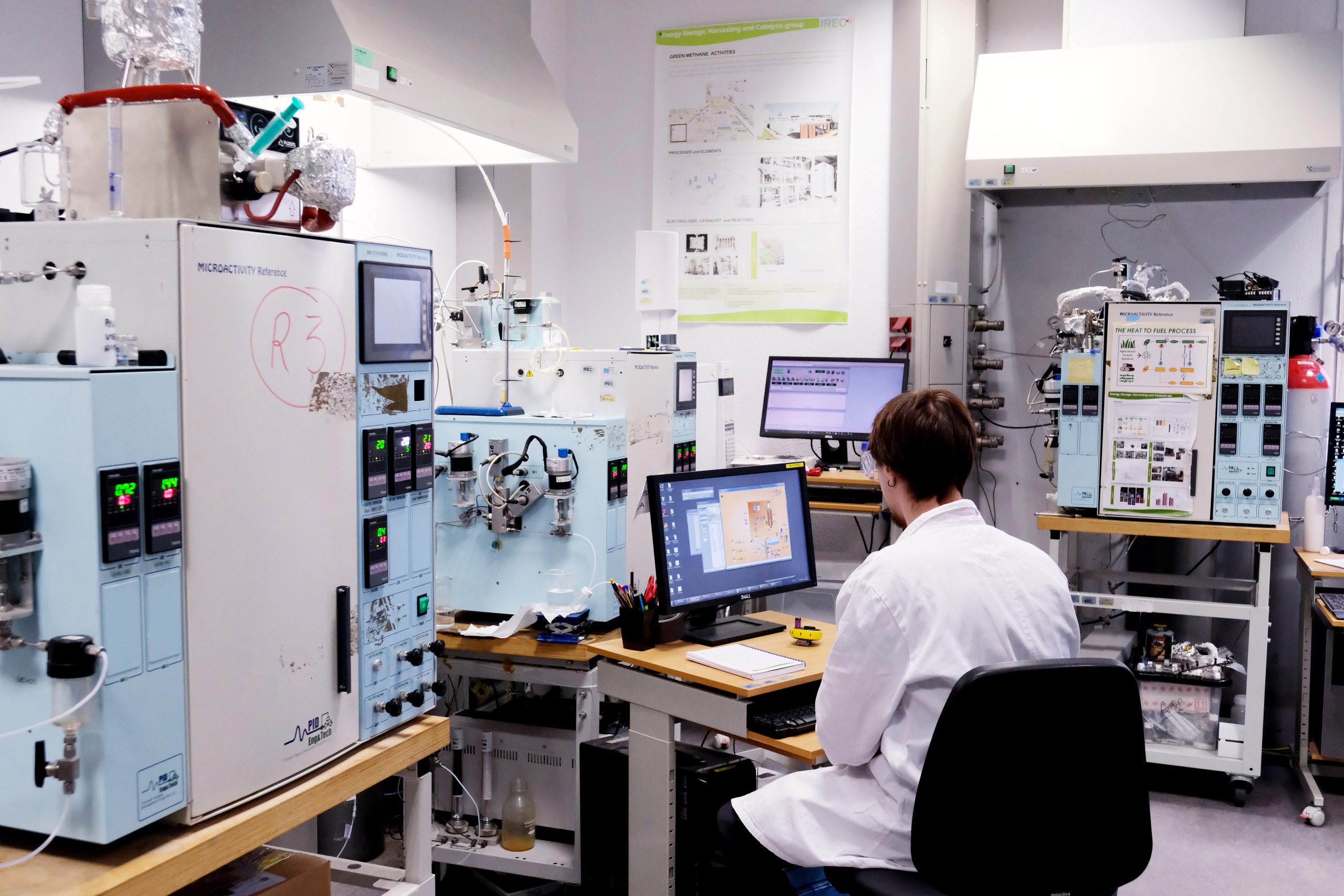
The department operates three specialised laboratories covering the full spectrum of energy storage and conversion. The Battery Laboratory integrates electrode fabrication, cell assembly and electrochemical testing under controlled conditions. The Electrochemistry Laboratory is equipped for photoelectrochemical characterisation, electrolysis and advanced analytical techniques including gas chromatography and mass spectrometry. The Catalysis Laboratory supports catalyst development, reactor testing and plasma-catalytic process validation. Complementary analytical platforms (XRD, SEM, BET, TEM) are available through institute-wide shared infrastructure.
Tech Transfer
The Energy Storage, Harvesting and Catalysis department translates its research into practical solutions through close collaboration with industrial partners, system integrators and public institutions. Our technology transfer activities span battery technologies for grid-scale and industrial applications, solar-fuel reactors, power-to-gas systems and plasma-catalytic processes for CO₂ valorisation. Through competitive and industrial projects, we have delivered demonstrators and pilot plants validating these technologies at pre-commercial scale.
News
Discover the latest news from our research teams and strategic initiatives.
-
MAKING PEDs recognized as a leading innovation for Positive Energy Districts
The MAKING PEDs project, coordinated by IREC, has concluded after developing innovative digital tools and methodologies to help cities plan Positive Energy Districts (PEDs) and accelerate their transition towards climate neutrality. Positive Energy Districts are urban neighbourhoods designed to generate more renewable energy than they consume, helping reduce emissions while creating greener, more sustainable places…
Read more: MAKING PEDs recognized as a leading innovation for Positive Energy DistrictsPablo Fernández Martínez
Vulputate aliquam gravida
-

Innovation Day Energia brings together companies, research centres and investors in Barcelona to address the challenges of the energy system
The eighth edition of Innovation Day Energia has brought together professionals from business, industry, science, finance and public administration in Barcelona to discuss the challenges facing the energy system and explore opportunities to accelerate the development and deployment of innovative energy technologies. Co-organised by IREC, CEEC and XRE4S, with the support of ICAEN, the event…
Read more: Innovation Day Energia brings together companies, research centres and investors in Barcelona to address the challenges of the energy systemPablo Fernández Martínez
Vulputate aliquam gravida
-

Two researchers join IREC to advance secure AI and digital twins for the Internet of Energy
Oliver Anderson and Gianluca Rapaglia have joined IREC’s Power Systems department as part of the SAILING project, a European initiative training 12 Early-Stage Researchers to advance digital twin and secure AI technologies. The Internet-of-Energy, the digital layer connecting and automating how energy is generated, stored and distributed, can play an important role in Europe’s transition…
Read more: Two researchers join IREC to advance secure AI and digital twins for the Internet of EnergyPablo Fernández Martínez
Vulputate aliquam gravida