What is Gara all about?
- Promote scientific culture around energy and sustainability
- Bring research closer to schools and local communities
- Encourage critical thinking through experimentation
- Inspire future scientific and technological vocations
GARA is IREC’s outreach and educational initiative focused on making energy research accessible, understandable and engaging for society. Through exhibitions, itinerant workshops, experimentation kits and digital educational resources, the project connects scientific knowledge with schools, teachers, students and local communities across Catalonia. The initiative promotes awareness around renewable energies, sustainability and the societal challenges of the energy transition while encouraging curiosity, participation and critical thinking through hands-on scientific experiences.
Competition of educational multimedia content
Contest for primary school students to create educational multimedia content on renewable energy. It aims to increase awareness of the energy transition while fostering critical thinking and helping combat misinformation.
Educational toolkits and suitcases
Variety of workshops led by its researchers and portable experiment kits featuring hands-on activities that help participants explore concepts such as energy consumption, hydrogen technologies, and air quality in the classroom.
Teaching units & videos
Curriculum-linked teaching units for ESO and Batxillerat on energy generation, storage, distribution and consumption, co-designed with active IREC researchers. Includes a general unit for primary and secondary students and educational videos in Catalan with Spanish subtitles.
Travelling exhibition
The GARA exhibition has toured schools and science centres across Catalonia since 2021. Combining informative panels, live experiments and guided visits, it makes energy research tangible for non-specialist audiences of all ages, from primary pupils to secondary students.
Connecting science, education and society
The energy transition is not only a technological challenge but also a social and educational one. GARA was created to help citizens better understand how energy systems affect everyday life and how research contributes to building a more sustainable, resilient and equitable future.
Through accessible dissemination formats and practical learning experiences, the initiative helps transform complex scientific concepts into understandable and engaging experiences for diverse audiences.
GARA initiative
Gara builds on a series of consecutive projects launched in 2021. Over time, it has evolved into a consolidated initiative that promotes public awareness and understanding of renewable energy, fosters curiosity about the topic, and encourages scientific vocations among young students. The content can be freely downloadable from this website or the Gara-IREC Zenodo community. The educational materials (exhibition, suitcases, Toolkit and more) can be lent free of charge, depending on availability.
- Gara and the energy that surrounds us
- Gara and the energy that surrounds us 3.0
- Gara OpenLAB
- Gara MOVES
- Gara CHECK
The exhibition on the energy transition is born
During its first edition (2021–22), IREC developed Gara and the energy that surrounds us, an exhibition project designed to promote scientific dissemination and innovation. The initiative targeted non-specialist audiences, aiming to strengthen general scientific knowledge through a key societal challenge—energy sustainability—and to showcase current energy solutions developed across IREC’s research lines.
The exhibition travelled throughout Catalonia, reaching different territories and audiences, and was complemented by a range of outreach activities organised alongside its itinerary. These activities helped to expand the project’s impact, fostering direct engagement with citizens and bringing energy science closer to schools and the wider public.
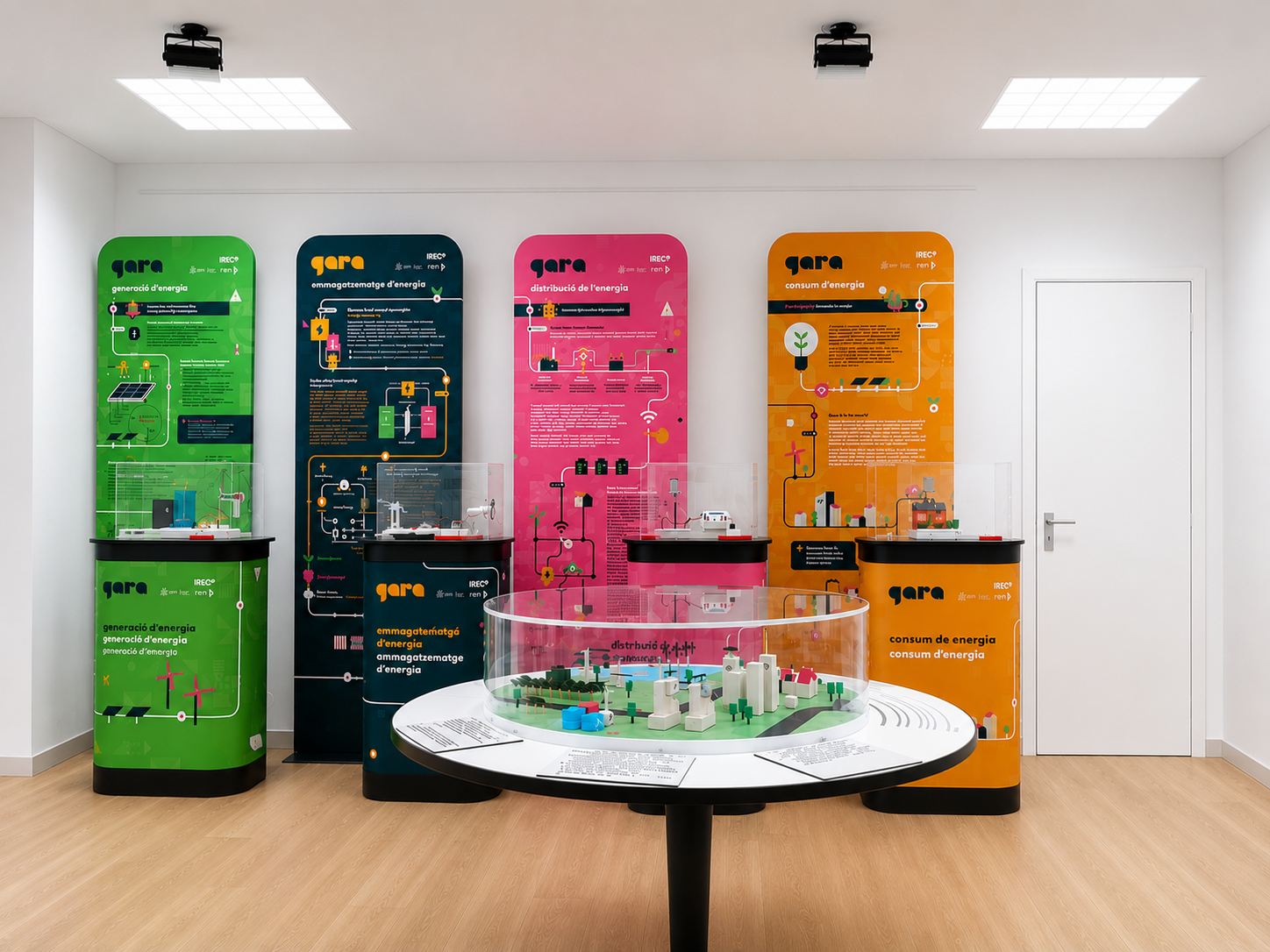
The initiative was supported by teaching units and didactic materials designed for use in schools, helping educators bring energy transition topics into the classroom and reinforce learning through structured educational resources.
Supporting material
Educational videos
You can find educational videos of Gara, related to the generation, storage, distribution and consumption of energy, and the related research and innovation actions carried out at IREC, in the following links (videos in Catalan, with Spanish subtitles):
Generation
Video
Distribution
Video
Storage
Video
Consumption
Video
Teaching units
These are teaching units designed for high school teachers (ESO & Batxillerat), related to generation, storage, distribution and consumption of energy (in Catalan).
Generation
in Catalan
Distribution
in Catalan
Storage
in Catalan
Consumption
in Catalan
Adaptation of the exhibition to the digital format
In its second edition, Gara and the energy that surrounds us 3.0 (2022–23), the project focused on transforming the exhibition into a digital format and developing a set of innovative educational tools. These included online teaching units for primary and secondary education, supported by a breakout game, downloadable infographics with audio narration, and a virtual tour of the exhibition.
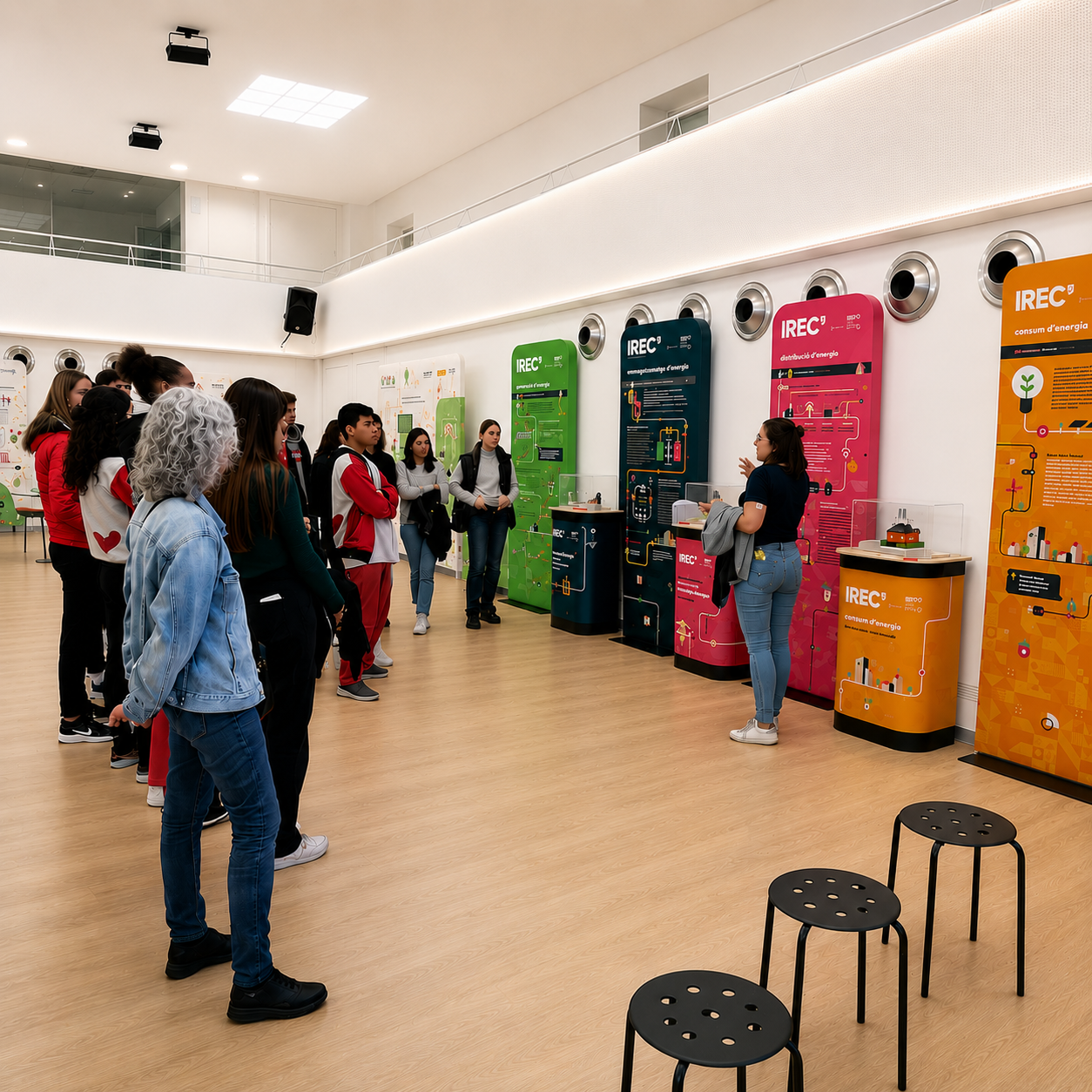
At the same time, the physical exhibition continued to travel across different locations, complemented by additional outreach and engagement activities designed to broaden its impact and reach new audiences.
Supporting material
Teaching units
Teaching Units regarding the use and consumtion of renewable energy, adapted for primary (5th- 6th grade) and secondary (1st-2nd ESO) school students can be downloaded here (in Catalan/Spanish):
Primary education
in Catalan
Secondary education
in Catalan
Primary education
In Spanish
Secondary education
In Spanish
Infographics
Gara has designed 5 infographics for high school students (ESO & Batxillerat), related to generation, storage, distribution and consumption of energy (in both Catalan and Spanish), in addition to a general infographic related to the travelling that energy needs to do in order to reach us.
General infographic
in Catalan
Storage infographics
in Catalan
Consumption infographic
in Catalan
Infographic generation
in Spanish
Distribution infographic
In Catalan
Infographic generation
in Catalan
Distribution infographic
in Catalan
General infographic
in Spanish
Storage infographics
in Spanish
Consumption infographic
in Catalan
360º virtual visit (Gara exhibition)
Explore the exhibition through Gara’s 360° virtual tour, allowing visitors to explore its contents online from anywhere. The video is available in both Catalan and Spanish.
Virtual visit
In Catalan
Virtual visit
In Spanish
Breakout-game
An online escape-room game for primary (5th- 6th grade) and secondary (1st-2nd ESO grade) school students. Players have just one hour to solve the challenges and complete the adventure. Think you can beat the clock? Try it now!
Primary school level
In Spanish
Secondary school level
In Spanish
Primary school level
In Catalan
Secondary school level
In Catalan
Educational suitcases for exploring the renewable energy at school
Gara OpenLAB (2024–25) introduced a new hands-on and citizen science dimension to the Gara initiative through the creation of 4 educational suitcases available for loan to schools and educational centres, free of charge. Designed for primary and secondary education, special education and non-specialist audiences, these portable kits allow participants to explore energy-related concepts through practical experiments, challenges, and play-based learning activities.
Each suitcase focused on key topics linked to the energy transition and included all the materials needed to carry out dynamic, interactive activities in classrooms. Accompanied by pedagogical guides, the kits help educators connect hands-on experimentation with curriculum-based learning objectives.
Through these activities, students were able to investigate real-world energy challenges first-hand. For example, they could analyse thermal comfort and indoor air quality in their own classrooms or build and operate an electrolyser to produce hydrogen directly in class. The suitcases circulated throughout Catalonia through a loan programme involving schools, municipalities, Educational Resource Centres (CRPs), and partner organisations such as Micropobles, extending the project’s reach across the territory.
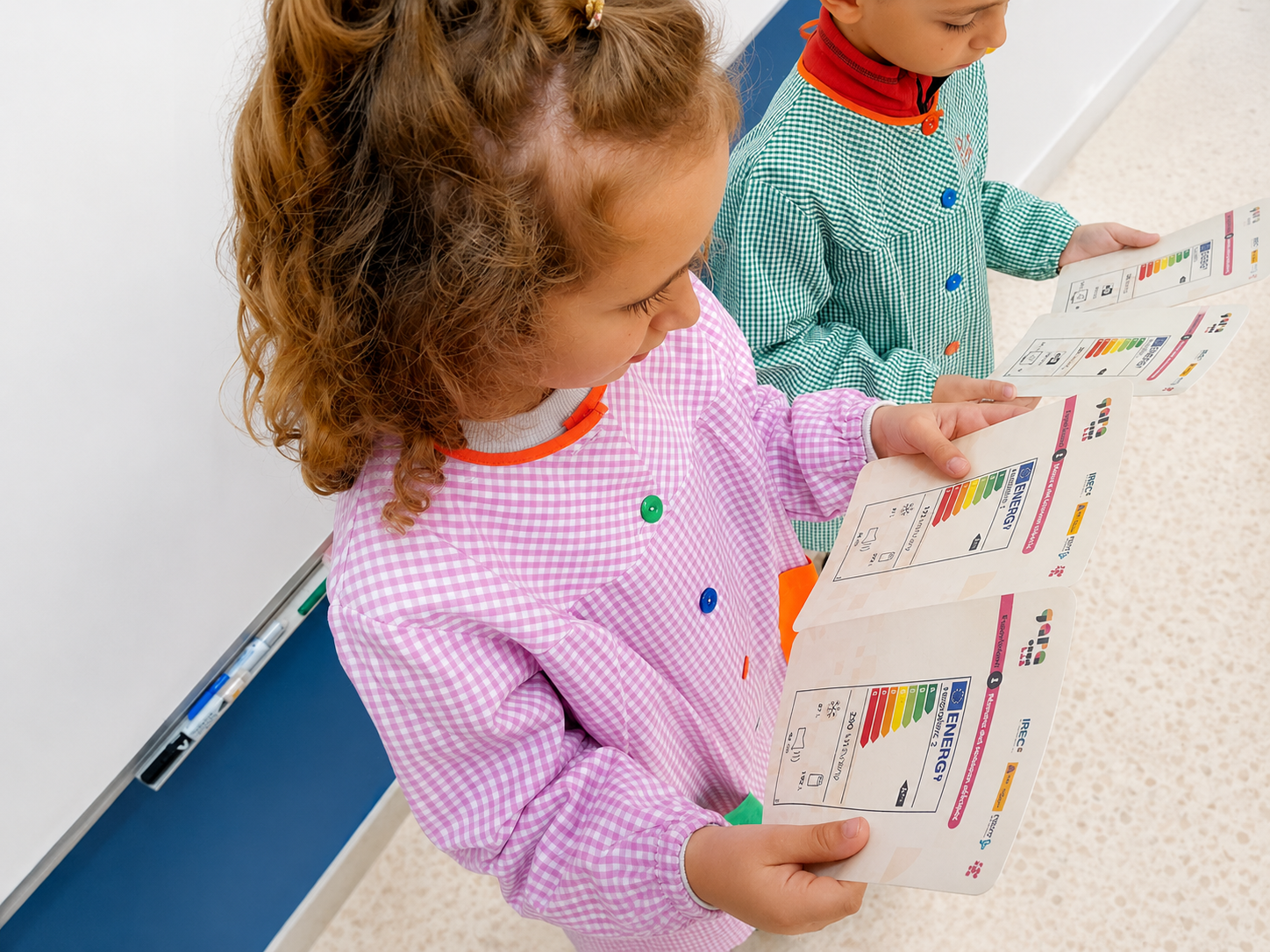
The materials were developed by IREC in collaboration with ESCIENCIA, Eduxarxa, and science education specialists from the University of Barcelona, ensuring both scientific rigour and educational value.
Suitcase contents
We currently have a total of four suitcases, all identical in content. Each one contains materials required to carry out five different classroom experiments, detailed below:
EXPERIMENT 1: Measuring electrical consumption
Suitcase item:
- Electrical consumption meter
- LED, low-consumption and incandescent light bulbs
- Lamp holder with switch
- Consumption cards for different household appliances
EXPERIMENT 2: Thermal insulation measurements
Suitcase item:
- Electrical consumption meter
- LED, low-consumption and incandescent light bulbs
- Lamp holder with switch
- Consumption cards for different household appliances
EXPERIMENT 3: Solar photovoltaic energy generation
Suitcase item:
- Electrical consumption meter
- LED, low-consumption and incandescent light bulbs
- Lamp holder with switch
- Consumption cards for different household appliances
EXPERIMENT 4: Hydrogen as an energy vector
Suitcase item:
- Electrical consumption meter
- LED, low-consumption and incandescent light bulbs
- Lamp holder with switch
- Consumption cards for different household appliances
EXPERIMENT 5: Energy efficiency and thermal comfort
Suitcase item:
- Electrical consumption meter
- LED, low-consumption and incandescent light bulbs
- Lamp holder with switch
- Consumption cards for different household appliances
Supporting material
Guide for teachers
The Gara OpenLAB suitcases are complemented by three guides for teachers (in Catalan only): one for primary education, one for secondary education, and one for special education. Each guide includes didactic descriptions specifically adapted to the corresponding educational level.
Guide for primary education
in Catalan
Guide for special education
in Catalan
Guide for secondary education
in Catalan
Worksheet for students
Student worksheets to be printed and bring to the classroom on the day of the experiment for each student/group of student performing the experiment.
Worksheets for primary education
in Catalan
Worksheets for special education
in Catalan
Worksheets for secondary education
in Catalan
Quick questions game
Prepare students after experiments with this quick quiz on energy concepts.
Quiz for students
In Catalan
Hands-on workshops to address energy misinformation in schools
The Gara-MOVES project aimed to tackle misinformation around the energy transition and climate change through a mobile educational laboratory. This initiative allows IREC researchers to bring hands-on, travelling activities directly to diverse audiences, ranging from primary and secondary school students (including special education) to rural communities.
This edition builds on the resources developed in previous phases while introducing an innovative itinerant format designed to maximise the impact of science outreach, reduce social barriers, and promote greater inclusivity. The project also involves the travelling exhibition “Gara and the energy that surrounds us”, outreach activities, and presentations delivered in various schools and educational centres. The mobile laboratory acts as a powerful tool to address misinformation on renewable energy and sustainability, providing evidence-based insights grounded in current scientific research. In this way, IREC researchers become storytellers of the modern energy transition, bringing rigorous and accessible science directly to society.
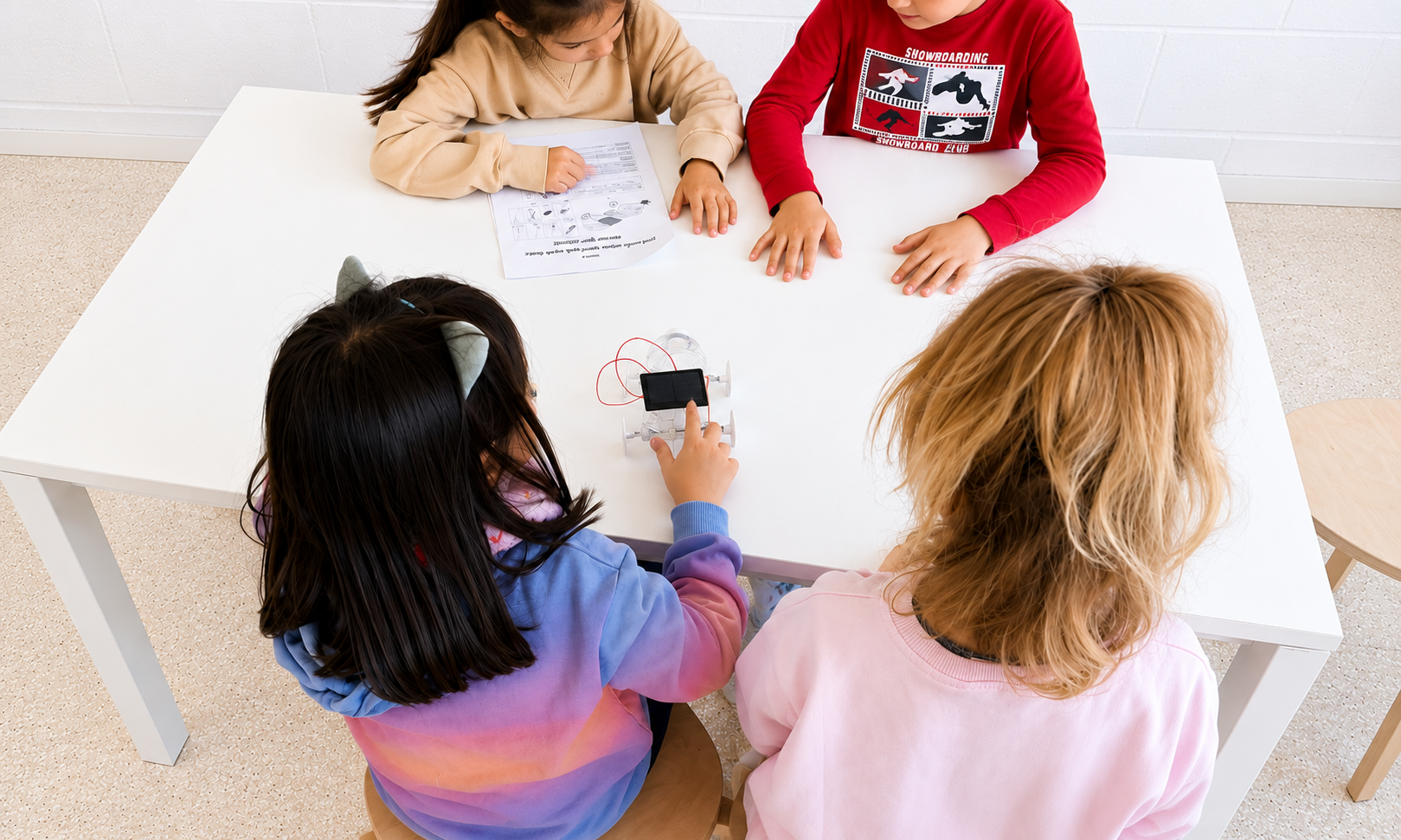
The materials were developed by IREC researchers in collaboration with ESCIENCIA and science education specialists from the University of Barcelona, ensuring both scientific rigour and educational value.
Itinerant workshops toolkit
The Toolkit has been designed to be delivered by IREC researchers and offers a series of practical and dynamic workshops that provide participating schools with engaging educational experiences throughout Catalonia, free of charge.
In addition to teaching concepts related to energy and sustainability, these workshops help participants understand how fake news and misinformation related to science and technology can be identified and challenged.
The Toolkit consists of five independent workshops, each addressing a different topic and designed for groups of up to 25 participants. Each workshop lasts between one and two hours, including an introduction, an experimentation and discussion phase, and final conclusions.
Workshop topics
On wheels with the sun: The energy that moves us
The future of batteries: From your phone to electric cars
The secret of artificial intelligence
The power of wind
Sustainable cities: How does a 100% renewable neighbourhood work?
Teacher & researcher guides
Guide for teachers
Primary school level:
On wheels with the sun: The energy that moves us
Available soon
The power of wind
Available soon
Secondary school level:
The future of batteries: From your phone to electric cars
Available soon
The secret of artificial intelligence
Available soon
Sustainable cities: How does a 100% renewable neighbourhood work?
Available soon
Guide for researchers
Primary school level:
On wheels with the sun: The energy that moves us
Available soon
The power of wind
Available soon
Secondary school level:
The future of batteries: From your phone to electric cars
Available soon
The secret of artificial intelligence
Available soon
Sustainable cities: How does a 100% renewable neighbourhood work?
Available soon
Empowering young voices to communicate science and challenge misinformation
The Gara CHECK project aims to address misinformation about the energy transition and climate change in its fifth edition by focusing on science communication skills and outreach by the youngest. The project offers a training activity in which participants create an educational video or video podcast, which can enter a competition and may also be included as part of the audiovisual module of the existing travelling exhibition.
The process is based on a co-creation approach, where IREC researchers act as mentors, supporting participants in developing content, recording materials, and contributing through interviews, social media videos, and other communication formats.
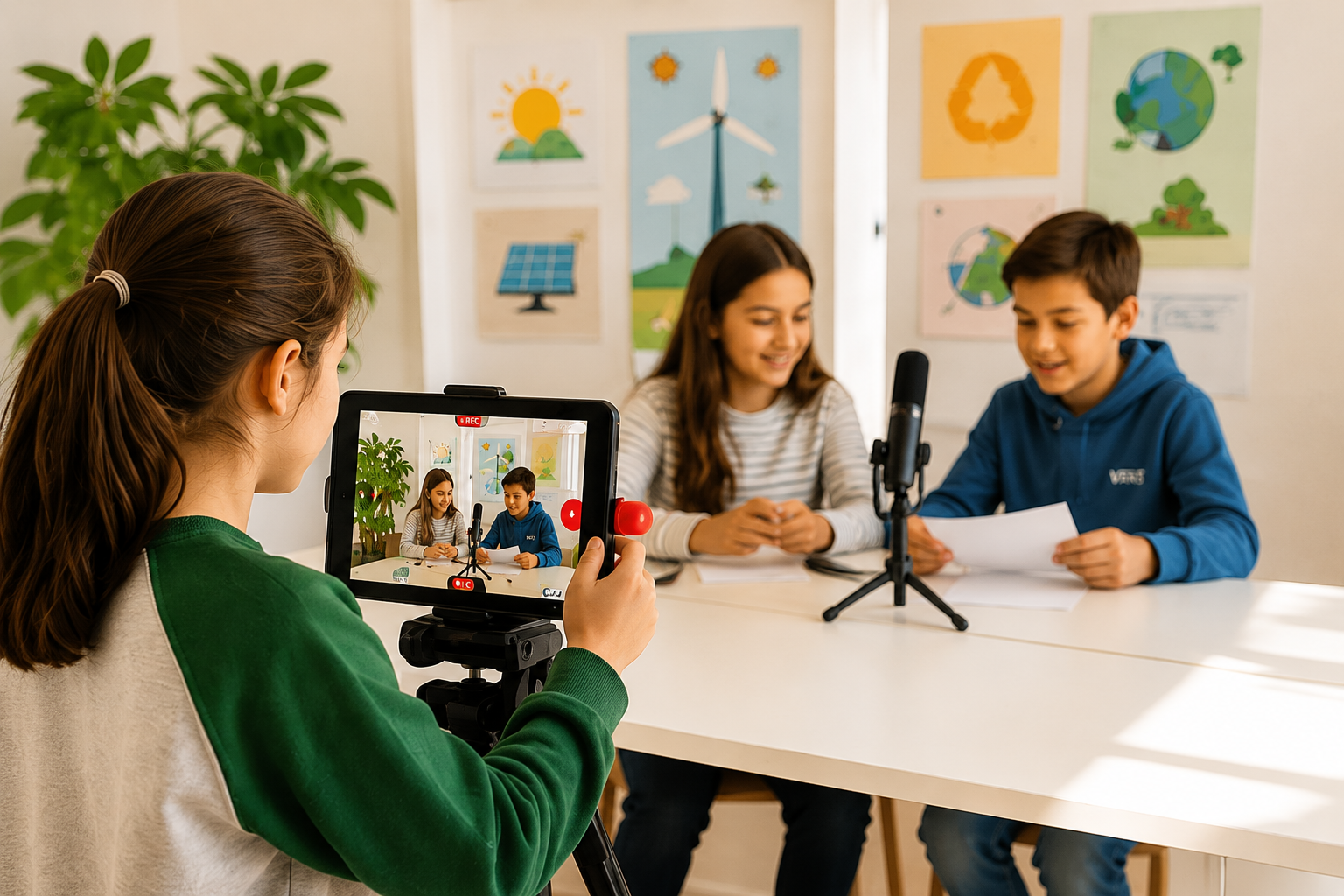
In addition, Gara CHECK updates and renovates outdated contents and damaged materials from previous suitcases and teaching guides, ensuring that up-to-date information is accessible to diverse audiences, with a special focus on primary school students in rural areas.

“Gara and the energy that surrounds us” (FCT-20-16136) is a science outreach project funded in collaboration with the Fundación Española para la Ciencia y la Tecnología (FECYT) -Ministerio de Ciencia e Innovación.
Help us improve your experience
Share your feedback about the exhibition and help us make future editions even better.
Requests for materials or participation in Gara activities
If your school, CRP, or organisation is interested in accessing the Gara materials, participating in any of the available activities, or receiving more information, please contact us at scicomm@irec.cat or use the contact form below (all fields are required).
Collaborators
The Gara initiative has a network of collaborators from the territory who have allowed the scope of the project to be expanded, the allocation of spaces, the distribution of materials and the improvement of the design of the materials.



With the collaboration of the Fundación Española para la Ciencia y la Tecnología – Ministerio de Ciencia, Innovación y Universidades.