
What is FACILITIES all about?
- Linking specialised laboratories to the full energy innovation pathway.
- Combining materials, systems, buildings and digital experimentation across IREC.
- Enabling validation, scale-up and collaboration across IREC research areas.
- Expanding strategic infrastructure for the next generation of energy solutions.
Facilities
IREC’s facilities form a connected research infrastructure that supports the full pathway from scientific discovery to technology validation. Across specialised laboratories, shared experimental environments and common analytical platforms, distributed across sites in Barcelona and Tarragona, work spans advanced materials, energy devices, electrical systems, buildings and communities.
Each part of this infrastructure has been developed to address specific research challenges, but the real strength lies in how these capabilities connect. Materials developed in fabrication laboratories feed into device testing environments. Electrical systems are studied alongside building integration platforms. Digital and analytical resources are shared across departments, ensuring consistent methodologies and reproducible results throughout the research process.
This infrastructure is designed to sustain excellent research, accelerate knowledge transfer and enable the translation of scientific advances into deployable solutions for the energy transition, providing the experimental depth that complex energy challenges require.

Advanced Materials and Systems for Energy Labs
From materials discovery to device validation and scale-up, across solar, storage, nanomaterials and solid-state energy technologies.
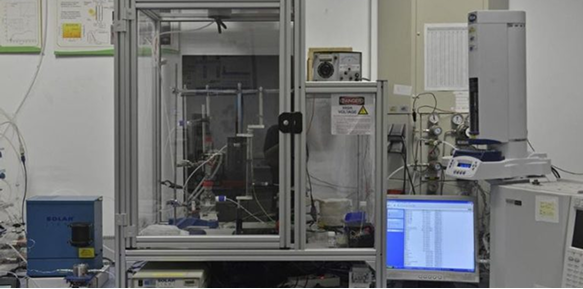
Energy Storage, Harvesting and Catalysis
Three specialised laboratories cover the full spectrum of energy storage and conversion: battery fabrication and electrochemical testing; photoelectrochemical characterisation and electrolysis; and catalyst development, reactor testing and plasma-catalytic validation. Shared analytical platforms including XRD, SEM, BET and TEM are available institute-wide.
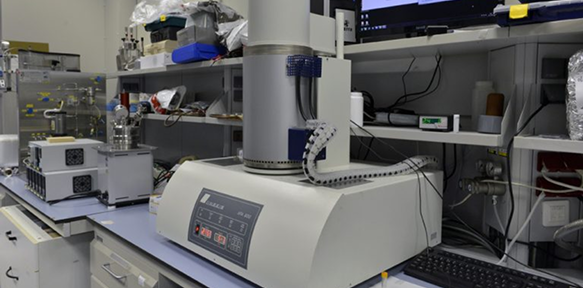
Functional Nanomaterials
A full nanomaterials research infrastructure spanning synthesis, processing, characterisation and device fabrication. Includes solution-based and flow-reactor platforms, a dedicated battery laboratory, a proprietary electrostatic jet-deflection printer for sub-micrometre 3D fabrication, and in situ and operando characterisation tools.
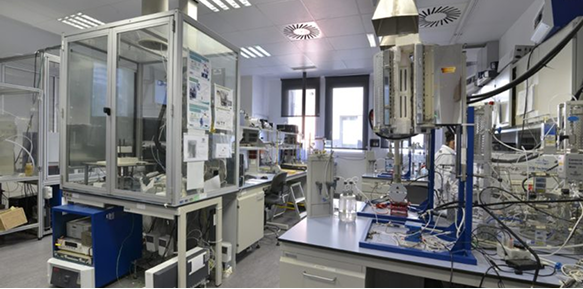
Nanoionics
The MERCÈ Lab pilot line connects advanced ion-transport materials with manufacturable solid-state devices. Integrated platforms for thin-film growth, ceramic 3D printing, operando optical characterisation and AI-accelerated discovery enable pioneering solid oxide cells, full-ceramic batteries and iontronic devices for hydrogen, storage and edge computing systems.
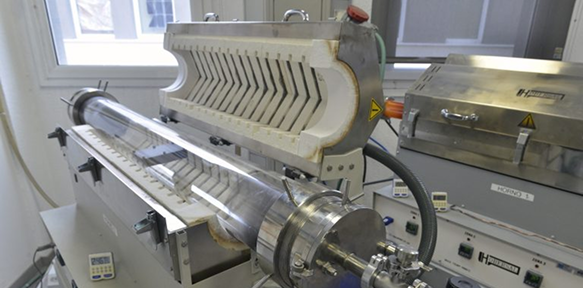
Solar Energy Materials and Systems
A complete thin-film fabrication line for semiconductor device production; a multimodal characterisation platform combining spectroscopic, imaging and electrical techniques with a proprietary AI library; dedicated platforms for robotised synthesis and characterisation prototyping; and indoor and outdoor testing facilities for solar performance evaluation.
Energy Efficiency in Systems, Buildings and Communities Labs
Shared experimental environments for investigating integrated energy systems and building solutions under realistic, dynamic operating conditions.
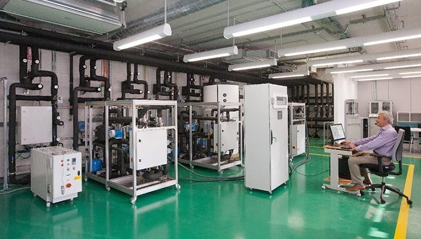
Semi-Virtual Energy Integration Lab (SEILAB)
SEILAB links real HVAC and renewable energy equipment with dynamic virtual models of buildings, districts and grids to assess performance, energy flexibility and comfort. A semi-virtual testing approach supports the development and integration of thermal and electrical systems, while its integration with Energy SmartLab enables district-scale aggregation and control strategies for climate-neutral, resilient communities.
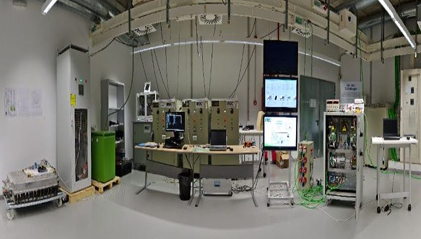
Energy SmartLab — Power Systems
A 200 kVA shared platform for research on power distribution, grid integration and microgrid behaviour. Combines grid emulation, battery testing and power hardware-in-the-loop capabilities to study devices and control strategies. Research focuses on decentralised intelligence, federated learning, edge computing and software-defined networks to advance grid resilience and cybersecurity.
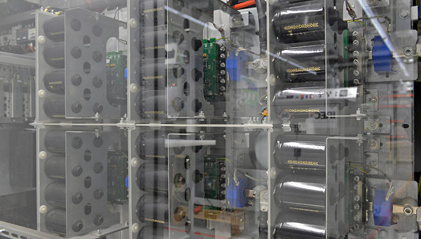
SmartLab — Energy Systems Analytics
SmartLab provides a semi-virtual environment where real batteries, EV chargers, flexible loads and renewable assets interact with digital twins of buildings, grids and markets. It combines advanced forecasting, optimisation and AI-assisted data analysis with experimental assets to study flexibility, aggregation strategies and business models, supporting decision-ready solutions for energy planning, operation and sustainability assessment.
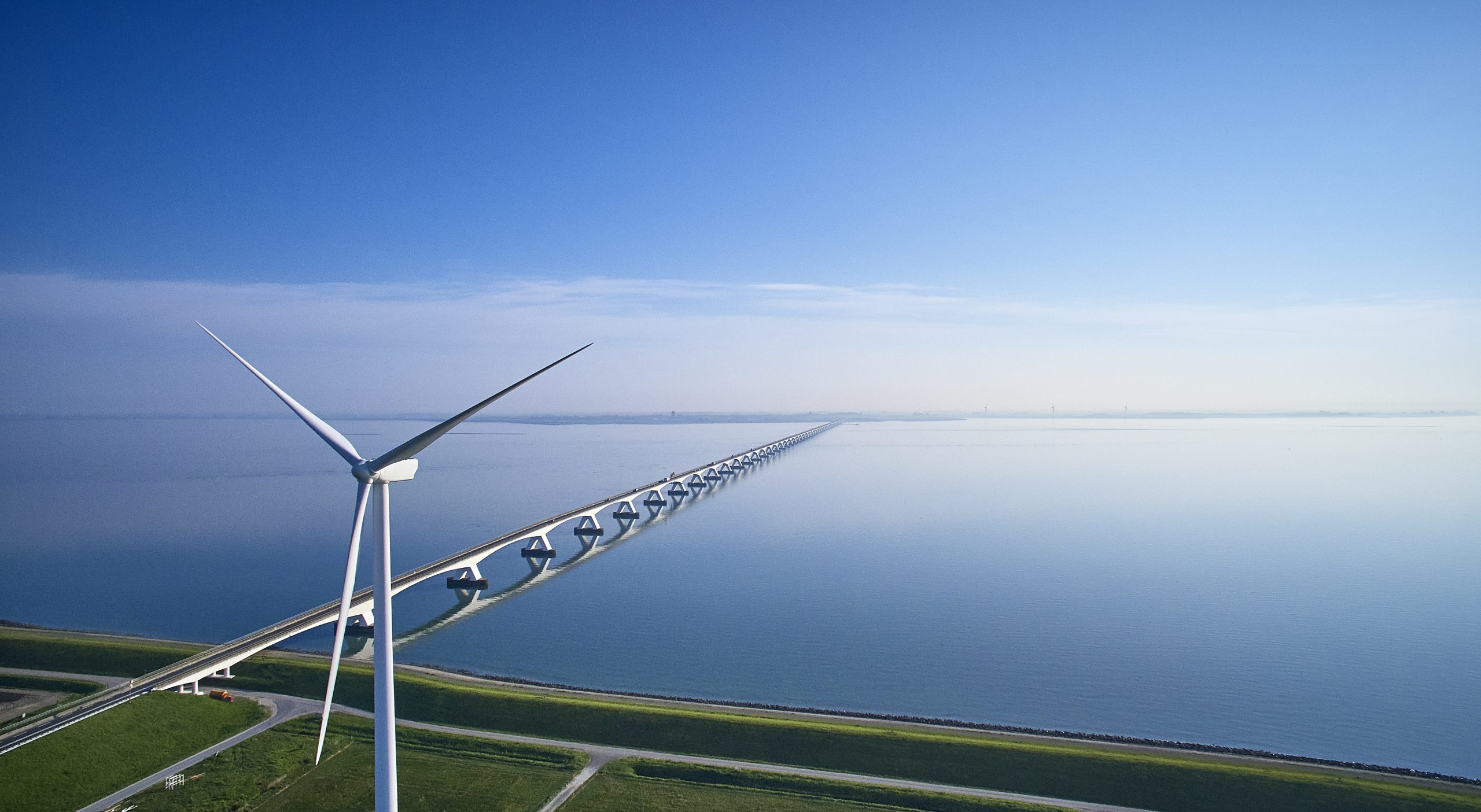
World-class R&D&I Laboratories
Frontier laboratories extending IREC’s experimental reach in marine energy, energy transition environments and AI‑driven research.
Services
Working with companies, universities and public institutions to advance research and develop deployable solutions for the energy transition.
IREC’s experimental infrastructure is open to companies, research organisations, universities and public entities engaged in research and innovation with a genuine connection to the energy transition. Collaboration takes place through joint research and innovation projects, where scientific expertise and experimental capability work together to explore new approaches, validate emerging technologies and study system behaviour under conditions relevant to real-world deployment. We engage with partners who bring shared scientific ambition — not to run standard tests on demand, but to pursue questions that neither party could address alone. For an overview of collaboration areas and available capabilities, visit the services section. To start a conversation, please get in touch.

Technology portfolio
Explore our innovations ready for transfer to industry.