
Advancing research on hydrogen and carbon for a sustainable future with ColdSpark
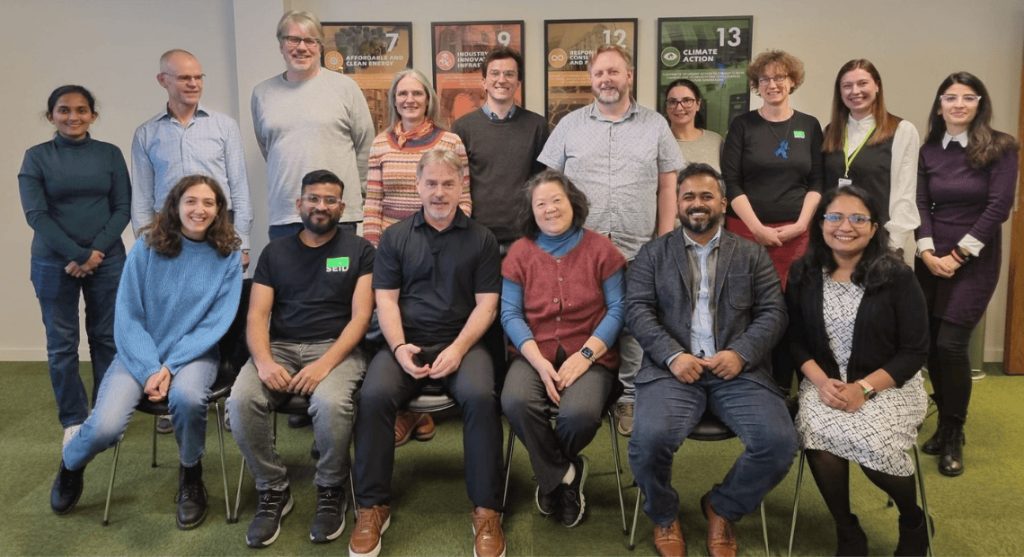
After three years of intensive work, the ColdSpark® project ended, holding its final event in Stavanger on the 26th of November 2025. The project focused on the development of non-thermal plasma methane technology to produce hydrogen and valuable carbon for industries.
Hydrogen was identified by the International Energy Agency as one of the key pillars of the energy transition, for both energy production and storage and for the decarbonization of hard-to-abate sectors, such as cement and steel production. On the other hand, it has been almost two decades since the importance of carbon, in its different allotropic forms, has emerged as a new material for advanced technologies such as batteries and capacitors, as well as for traditional uses in tyres, ink, steel, and silicon production.
ColdSpark® worked to develop a novel process to produce hydrogen and valuable carbon without catalysts, at low temperatures (<500 °C) and with lower electricity use than traditional electrolysis, all while avoiding direct CO₂ emissions. The consortium built an upgrade scale reactor in the SEID laboratory, producing carbon and hydrogen with promising efficiency.
IREC supervised the sustainability work package, which focused on the environmental and economic evaluation of the project solution. This action is led by Victor Ferreira and Isabella Bulfaro from the Energy Systems Analytics Department at IREC.
Based on IREC’s research, supported by the ColdSpark® consortium, the non-thermal plasma solution shows competitive environmental performance compared with conventional hydrogen and carbon production pathways. When biomethane is used as feedstock instead of fossil methane, the system can even achieve net CO₂ removal. However, the classification of ColdSpark® hydrogen as low-carbon is strongly dependent on the fate of the co-produced carbon. To meet EU regulatory thresholds, the carbon must be either mineralised or stored, to avoid its release back to the atmosphere.
A strong correlation with carbon utilisation is also evident in the economic assessment. ColdSpark® demonstrates excellent economic potential, achieving an H₂ production cost comparable to conventional steam methane reforming. This competitiveness is particularly notable when carbon can be sold, for instance in regions like Norway, with abundant natural gas and electricity, and when the electricity demand of the process aligns with the EU target of 15 kWh/kg H₂.
The consortium is formed by 7 European partners including SEID AS (leader), IREC, UiS (University of Stavanger), NORCE (Norwegian Research Centre AS), EUROPROJECT, IBBK (Fachgruppe Biogas GMBH) and UOL (University of Liverpool).
Funded by the European Union. Views and opinions expressed are however those of the author(s) only and do not necessarily reflect those of the European Union or European Climate, Infrastructure and Environment Executive Agency (CINEA). Neither the European Union nor the granting authority can be held responsible for them.
