
SPINELKING will pioneer next-generation thin film batteries for sensors and medical devices
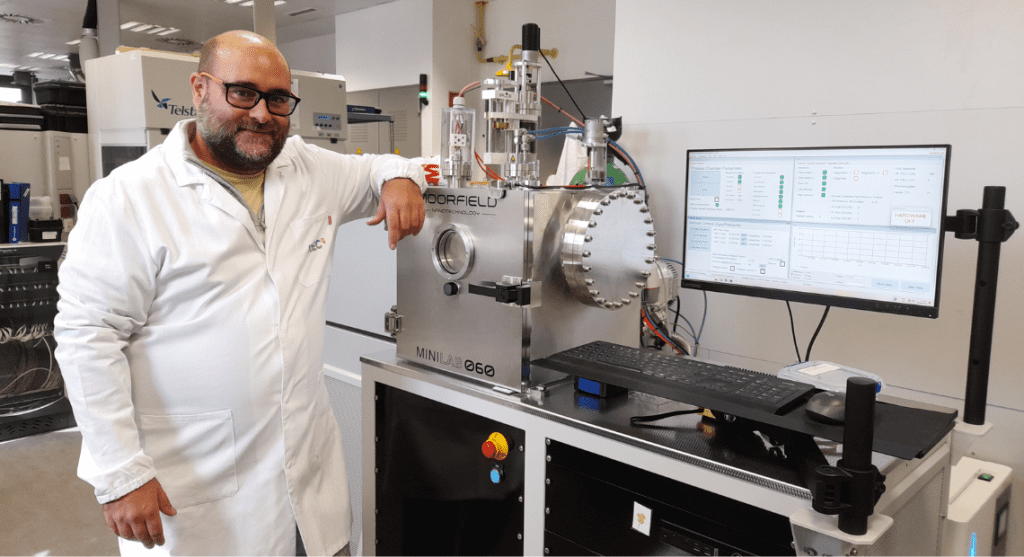
The SPINELKING project has officially started at IREC, aiming to revolutionize the field of thin film batteries for miniaturized sensors, implantable medical devices, and low-power IoT applications.
With the global market for implantable medical devices rapidly expanding—alongside new opportunities in smart dust technologies and real-time clock/back-up power solutions—there is an urgent need for safer, smaller, and more efficient power sources. Current thin film batteries, typically based on lithium metal and cobalt chemistries, face major challenges: toxicity, dependence on critical raw materials, and complex packaging.
SPINELKING introduces a breakthrough alternative for the development of an all-oxide, spinel-based thin film battery with higher capacity. The project aims to demonstrate stackability of the technology through innovative approaches, paving the way to produce the smallest and highest energy density thin film battery on the market, enabling new generations of implantable and portable devices that are both sustainable and efficient.
The project is led by Juan Carlos González Rosillo from the Nanoionics and Fuel Cells Department at IREC. SPINELKING has a total budget of 150k€, will run for 18 months (from September 2025 to March 2027), and is set to provide a critical proof-of-concept that will de-risk the technology and accelerate its path towards commercialization.
By pushing the limits of thin film battery design and fabrication, SPINELKING positions IREC at the forefront of energy storage innovation for healthcare, IoT, and beyond.
Acknowledgements (in Catalan): El projecte (2025 prod 00005) compta amb el suport del Departament de Recerca i Universitats de la Generalitat de Catalunya.
