
Advancing the energy transition with multiport converters
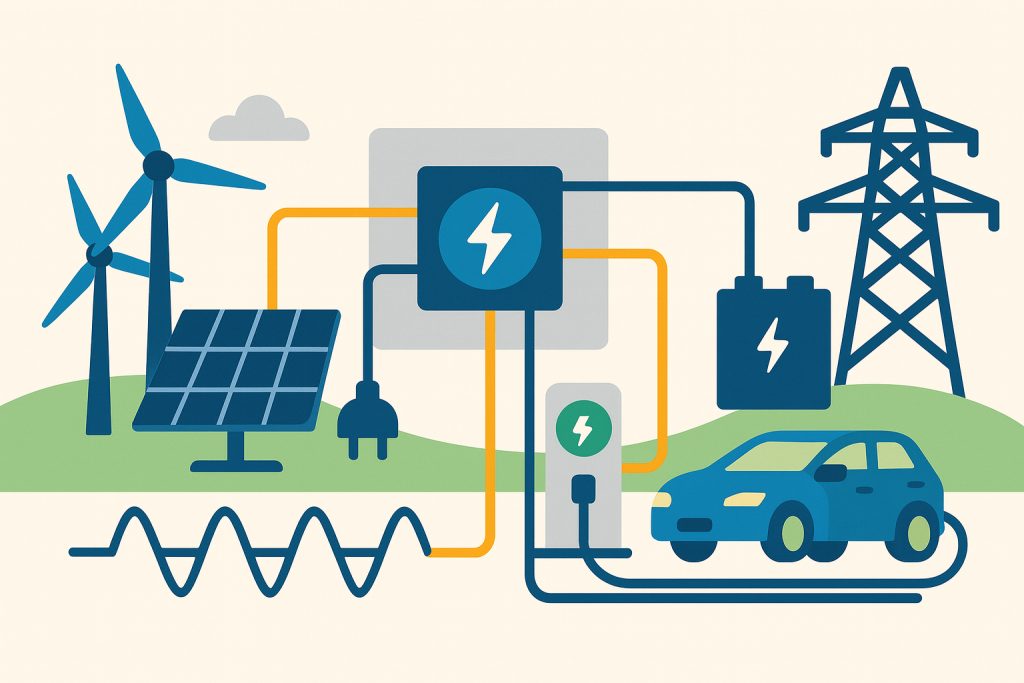
The iPLUG project has successfully concluded this summer, after 36 months of intensive research, supporting the energy transition with crucial scientific contributions. The project focused on new multiport converter designs, advanced planning, operation and control strategies to ease the integration of distributed energy resources, like renewable energy sources, energy storage systems, and electric vehicles into the power grid.
As variable renewable energy resources, like solar and wind, displace conventional fossil-fuel based thermal power plants, advances in their power electronics interfaces become essential. Furthermore, the variability of these resources requires more sophisticated control systems to ensure the reliable operation of the power grid and minimize the risk of blackouts. Traditionally, each distributed energy resource relies on a single input/single output converter, that must be coordinated with others in order to provide flexibility and grid services.
The iPLUG project challenged this paradigm by exploring multiport converter topologies: a new class of power electronic devices that can integrate and connect to the grid multiple energy resources at the same time.
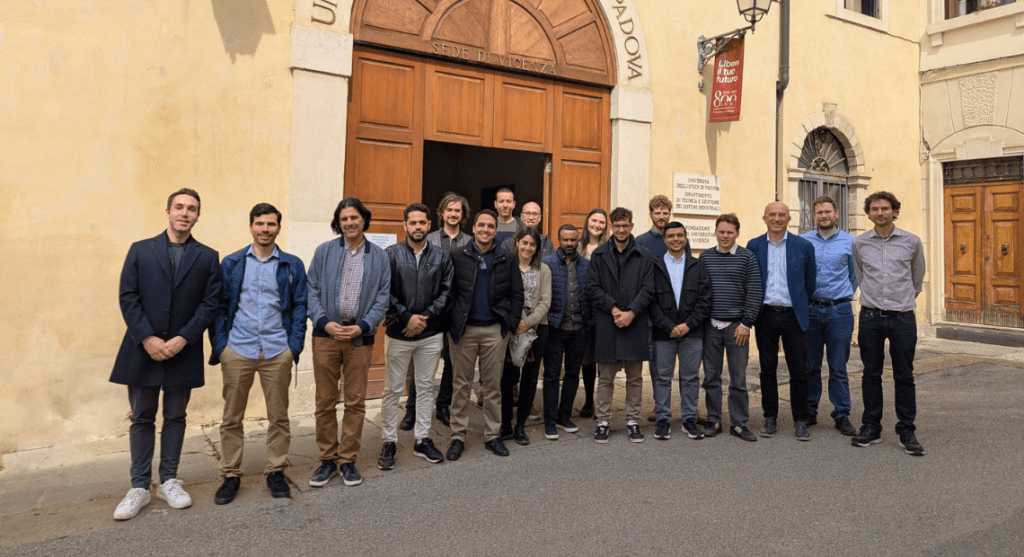
The project partners were CITCEA-UPC (coordinator), the University of Padova, IREC, Chalmers, Estabanell Energia, infraestructures.cat, Typhoon HIL and theUniversity of Strathclyde. IREC worked on advanced models and controls for multiport converters, investigated their optimal operation in distribution grids, validated the developed models and controls in the Energy SmartLab and the Typhoon Remote Testbed and finally carried out a life cycle assessment of multiport converters, comparing them to the traditional single input/single output solutions proving the potential environmental benefits of the iPLUG proposed solutions. This work was carried out by several researchers, including José Luis Domínguez García, Andrés Camilo Henao-Muñoz, Antonio Pepiciello, Mohammed Debbat, and Gabriela Benveniste, from the Power Systems and Energy Systems Analytics Departments.
Through these results, iPLUG laid the technical and scientific foundations for a new way of integrating and coordinating multiple distributed energy resources, unlocking their potential to provide essential services to the grid and ultimately contributing to a resilient and sustainable energy transition.
Funded by the European Union. Views and opinions expressed are however those of the author(s) only and do not necessarily reflect those of the European Union or CINEA. Neither the European Union nor the granting authority can be held responsible for them.
