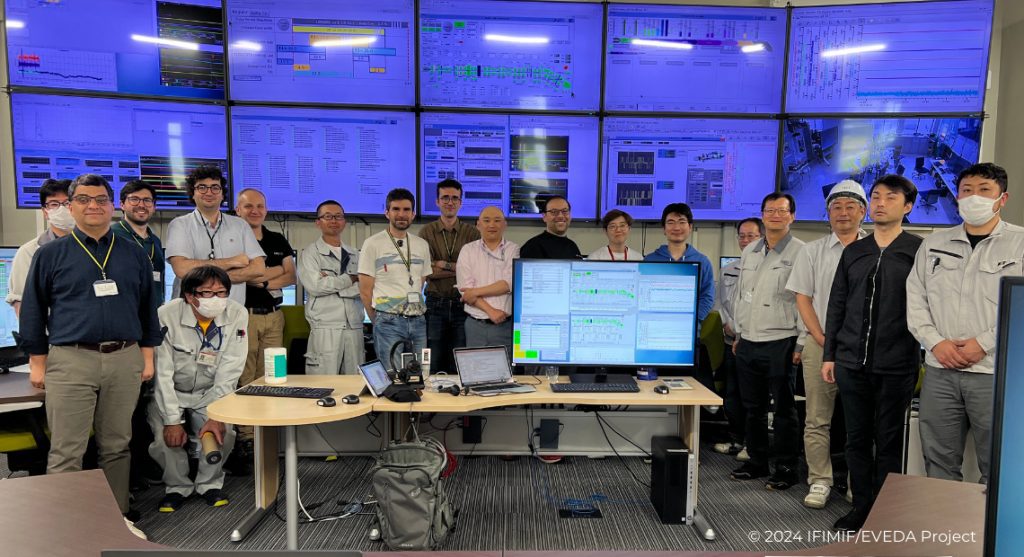
Important achievements of LIPAc prototype to reach fusion energy
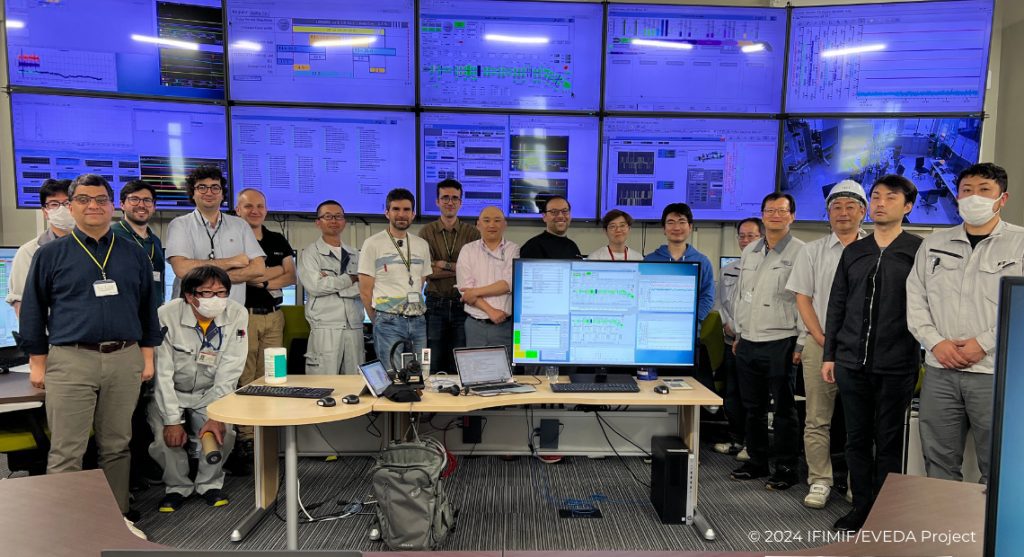
On the path towards achieving Fusion Nuclear Energy, plans include the establishment of an International Fusion Materials Irradiation Facility (IFMIF) to assess neutron-resistant materials for DEMO and forthcoming fusion power plants. To accelerate the material qualification process for a DEMO project, an Engineering Validation and Engineering Design Activities (IFMIF/EVEDA) was encompassed within the Broader Approach agreement between Europe and Japan. While the test facility and the lithium facility have been already validated, the accelerator facility is still under validation at the Rokkasho site in Japan. This validation is done thanks to the commissioning of the Linear IFMIF Prototype Accelerator (LIPAc), representative of the IFMIF low energy segment. This 1:1-scale prototype accelerator from the injector to the first cryomodule together with the High Energy Beam Transport line and the High Power Beam Dump prototype aims to accelerate deuteron beam of 125mA at 9 MeV in continuous wave.
LIPAc’s commissioning is done progressively in several phases, namely A, B, B+, C and D. Phases A and B have already been accomplished and the phase B+ ended successfully on 28 June 2024.
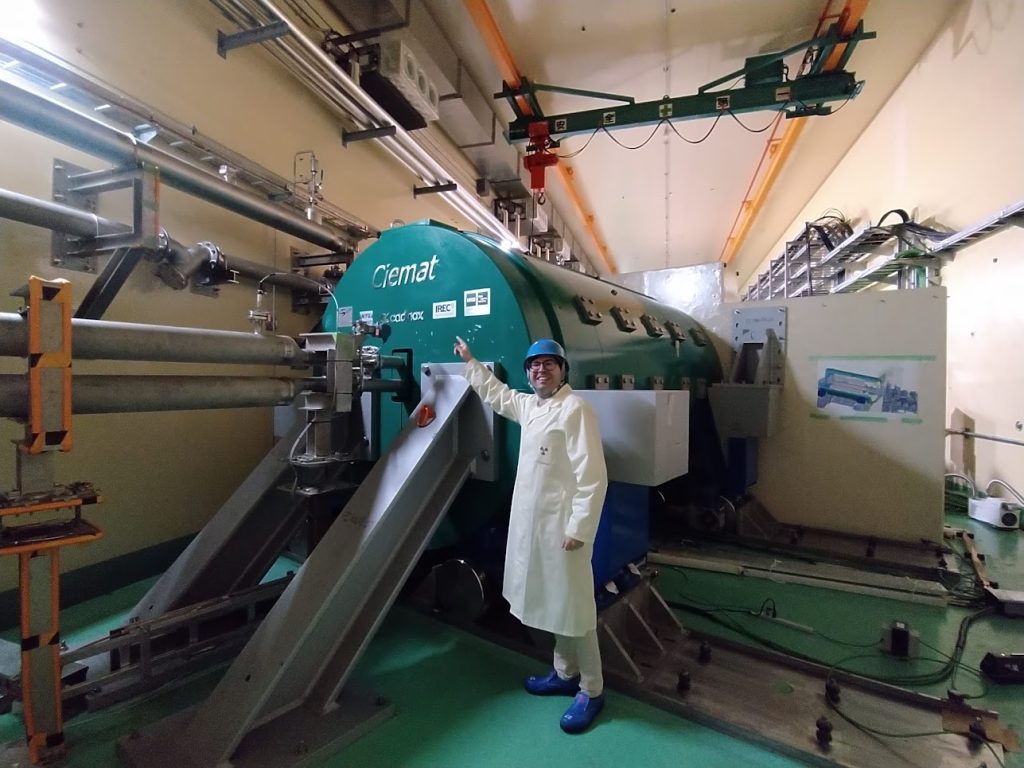
Researchers from the bFUS programme at IREC, Oriol Nomen and Llorenç Macià, travelled to Rokkasho to support the ongoing phase, partly funded by CIEMAT and EUROfusion. By the end of this summer, Phase B+ was completed as its objectives were met, including:
- Installing and verifying the function of the High Energy Beam Transport (HEBT) and High-Power Beam Dump, both designed, built, and installed onsite by IREC with the support of the onsite team.
- Successfully reaching a beam current of up to 118 mA.
- Maintaining a duty cycle of 8.75%.
- Delivering a power output of 40-45 kW to the Beam Dump.
This milestone is a key step towards developing the IFMIF/DONES facility and advancing Fusion Nuclear Energy. The successful design, installation, and testing of the HEBT and Beam Dump systems are crucial for the accelerator’s full operation. These accomplishments demonstrate the technical capacity and commitment of our team, reflecting the high standards of research and innovation at IREC.
We are committed to ongoing collaboration with international partners to optimize particle accelerator technologies and look forward to further success as the project progresses.