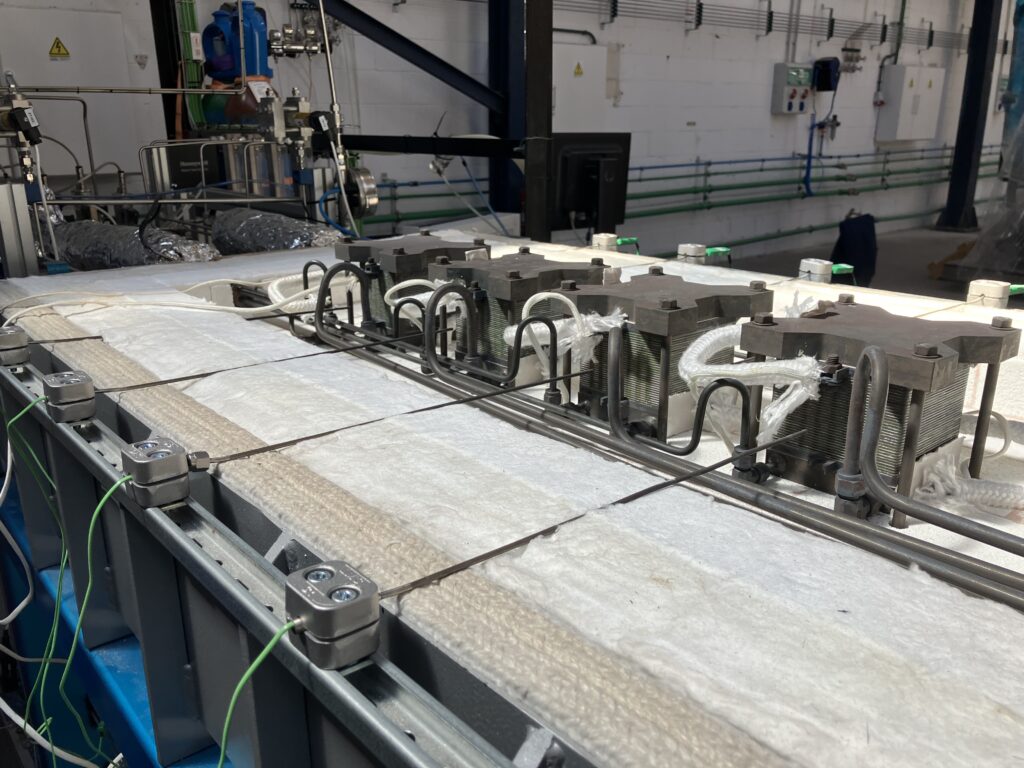
A 5kW electrolyzer produces green hydrogen for the steel industry successfully
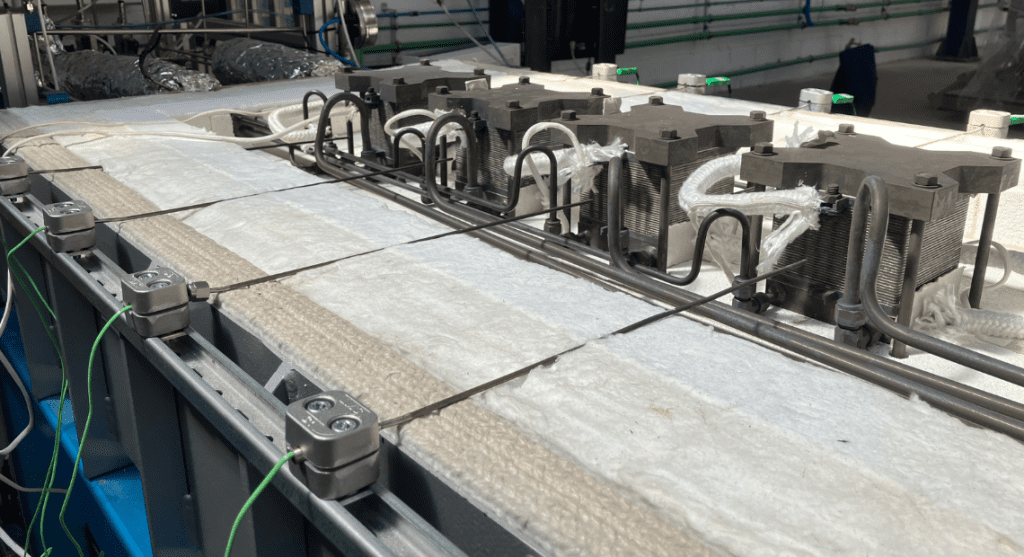
Facing the challenge of decarbonizing high-energy-consuming industries, the Hymet project has concluded four years of research by developing a national 5-kilowatt electrolyser that produces green hydrogen “more efficiently” to valorise the waste generated by the steel industry.
Driven by the Spanish multinational Celsa and the Catalonia Institute for Energy Research (IREC), alongside other companies and technology centres, the project has explored the applications of SOEC technology for the sector. This high temperature electrolyser utilizes residual heat and excess steam generated in industrial facilities to produce renewable hydrogen.
“Hymet has validated the utility of this technology to enhance the value of mill scale—a byproduct rich in iron oxide—while minimizing climate impact,” said Anna Casals, head of innovation at Celsa, a group committed to achieving 98% waste valorisation by 2030.
The high-temperature electrolyser breaks down water vapor into hydrogen using renewable electricity, producing green hydrogen—a key energy vector at the centre of discussions during COP29 in Baku (Azerbaijan), which began last Monday and will run until November 22.
The hydrogen is later used to give a second life to the byproduct through a reduction reactor, also developed under the Hymet project. According to Casals, this effort has brought “major advancements in both reduction and electrolysis technologies,” whose use will help Celsa “close the loop” in its sustainability strategy.
Marc Torrell, senior researcher at IREC, stated that SOEC technology is “mature enough to be scaled.”
In addition to coordinating the project technically, IREC worked with the company AMES PM Tech Center to develop the components for the stack—the electrochemical device that forms the “core” of this technology.
According to project engineer Unai Puertas from Técnicas Reunidas, the SOEC prototype “achieved a consumption of 38 kilowatt-hours per kilogram of hydrogen,” significantly reducing the consumption of other technologies, which “rarely drop below 50 kilowatt-hours.”
This prototype, built by Técnicas Reunidas in collaboration with AESA, represents, in Puertas’ view, an incentive to continue developing future designs, aiming to “not stop at five kilowatts but integrate the technology into large-scale plants that can serve industrial applications.”
Researchers agreed that the project, framed within the Ministry of Science, Innovation, and Universities’ ‘Missions: Science and Innovation’ program through the Center for the Development of Industrial Technology (CDTI), has created “a consortium” they hope will continue seeking solutions for the decarbonization of various sectors.
The related news release by EFE News Agency in Spanish (ES) and Catalan (CAT) can be downloaded here: