
A 3D-printed battery developed in Spain to prevent machinery failures for industry
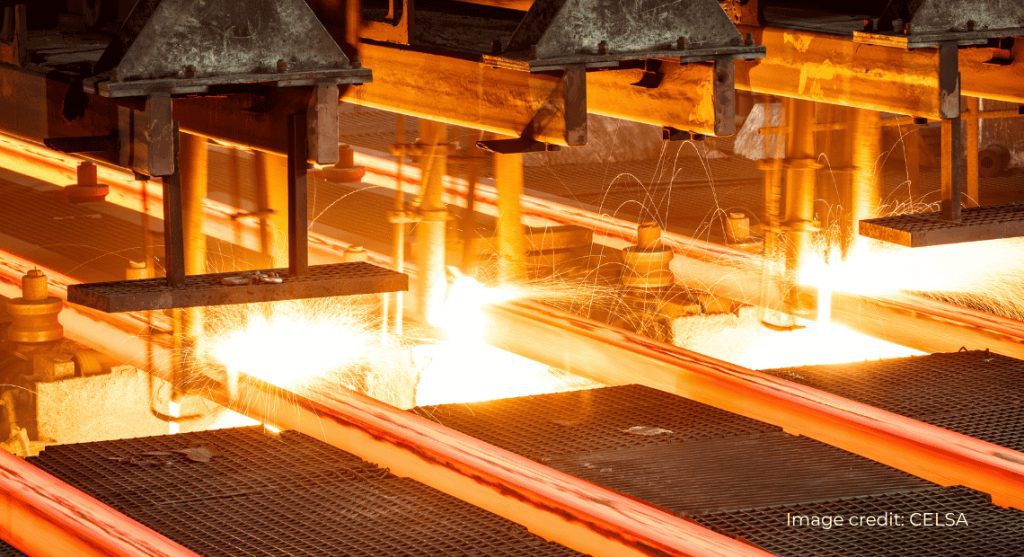
The 3Dstore project, led by the Catalonia Institute for Energy Research (IREC), with the participation of the Universitat Oberta de Catalunya (UOC) and the steel company CELSA, has developed an industrial monitoring system powered by a solid oxide battery, manufactured by 3D printing, which enables the early detection of faults in machinery in complex industrial environments.
This device enables predictive maintenance so that defects can be detected and repaired in scheduled downtime, which, according to the researchers, would save costs “in the hundreds of thousands of euros”, as unplanned interruptions to production would be avoided.
As explained by ICREA professor and head of the Nanoionics and Fuel Cells department at IREC, Albert Tarancón, the aim of the project is “to monitor and digitalize strategic industries such as the steel sector.”
In addition to IREC, UOC and CELSA, the 3Dstore project has also involved the Basque research centre for electrochemical and thermal energy storage CIC energiGUNE and the University of Castilla-La Mancha.
How does the pilot project work?
The pilot project is based on the use of a solid oxide battery capable of operating at high temperatures and powering a very low-energy electronic system with cellular connectivity.
This battery has been manufactured using 3D printing, which optimizes the use of materials and allows the battery shape to be adapted to the needs of the application.
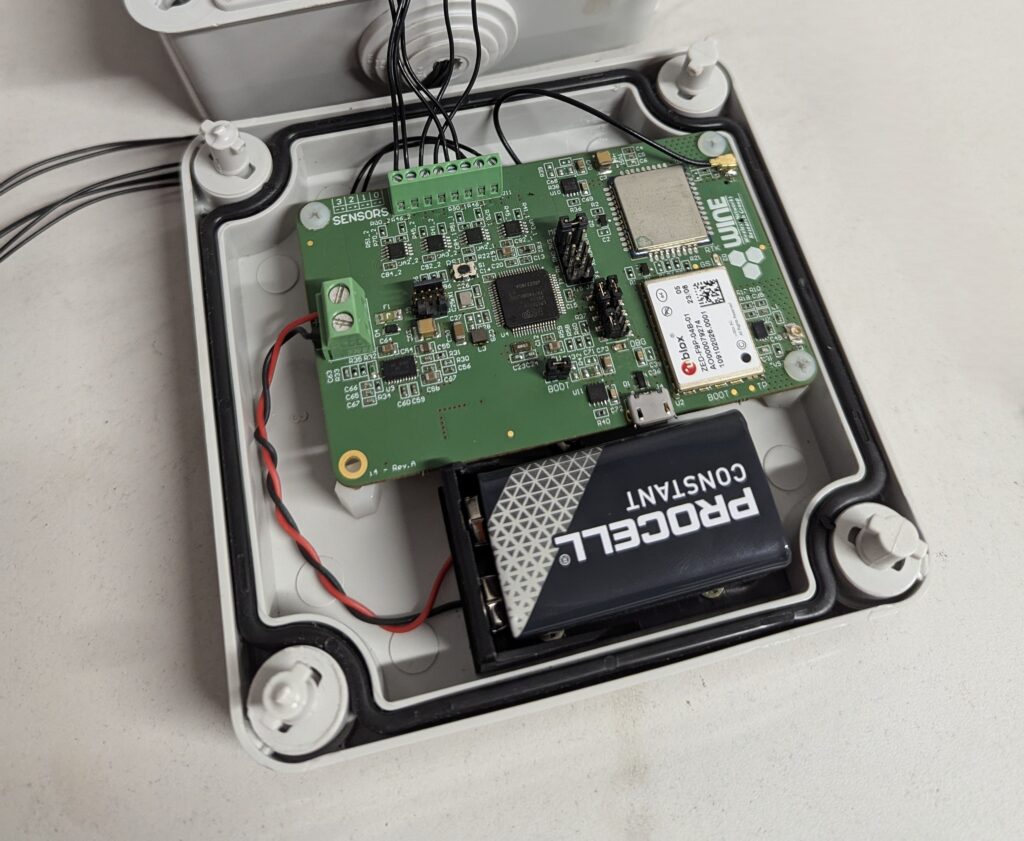
UOC was responsible for the design and development of the electronic device and its deployment at CELSA. Its vicepresident for Research, Transfer and Entrepreneurship and ICREA professor, Xavier Vilajosana, explained that the device was installed on the shaft of a rolling mill, an industrial machine that uses rollers to flatten steel bars to produce steel profiles.
The device measured the vibration and temperature of the shaft in order to anticipate a possible failure, which, according to Vilajosana, would avoid a production stoppage of “at least four to eight hours”, leading to “extremely high costs of hundreds of thousands of euros” due to the operating expenses of this type of industry.
Advantages of this technology for failure prevention
CELSA highlighted that the savings from this preventive technology are also energy-related, since while the machine is stopped, the furnace continues consuming gas at 1200 degrees Celsius to heat the steel. Therefore, avoiding failures also translates into improved competitiveness and sustainability.
Experts pointed out that the next step for the new technology designed by UOC and IREC is to implement this type of solution at other stations in CELSA’s production chain, and can be extended to any industry operating in a “harsh” environment.
“Monitoring this type of industry is complex, but at the same time necessary, because these are highly complex processes that require maintenance which, if predictive or preventive, helps to avoid major issues,” Tarancón concluded.
Moreover, the technology could also be used to monitor critical infrastructures such as bridges, tunnels or roads.
Today, we launch a news release, that can be downloaded:
Acknowledgements (in Spanish)
Este contrato es parte del proyecto PLEC2022-009412, financiado por MCIN/AEI/10.13039/501100011033 y por la Unión Europea “NextGenerationEU/PRTR”.