
Final outcomes of the HYBRIS project
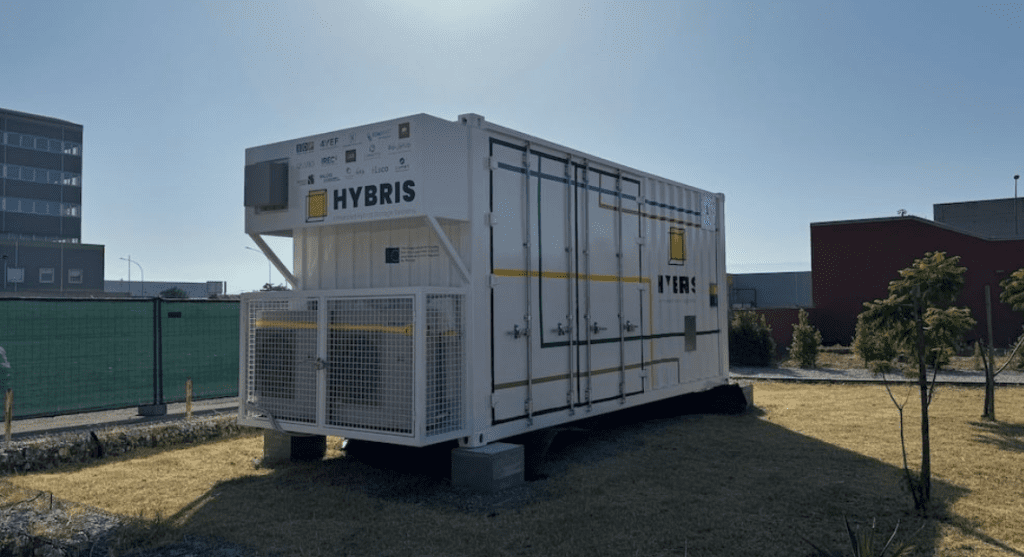
During the past four years, the HYBRIS project (Hybrid Battery energy stoRage system for advanced grid and beHInd-de-meter Segments) has focused on the development of a Hybrid Energy Storage System (HESS) by integrating lithium titanate (LTO) batteries and aqueous organic redox flow battery (AORFB) technologies. The ultimate goal is to be able to address different energy demands, from power intensive requests to long-term energy release.
The central goal of HYBRIS was to demonstrate the viability of these hybrid systems in different use cases such as island microgrids, to release energy services where conventional power grids are not available, grid-connected microgrids, where energy storage can release services to ensure stability, reduced operational costs and increased renewable energy use and energy communities and private users, where usually storage systems are essential to obtain cost-saving and reliability.
Two research groups at IREC have contributed to this project, including the Battery Materials group (with activities led by Elías Martínez) and the Power Systems Department (activities coordinated by Àlber Filbà, together with Lluís Trilla).
The integration of the two battery systems required advanced power electronics to manage the flow of energy between the batteries and the grid. To achieve an optimal integration, a power conversion system (PCS) has been designed through an iterative, multi-objective optimization process maximizing conversion efficiency and minimizing capital and maintenance costs. The optimum PCS uses two bidirectional dc-dc converters interfacing the batterie and one dc-ac converter connected to the dc-dc converters output and the grid. The performance of the PCS is validated through experimental tests performed with a scaled prototype at IREC SmartLab laboratory.
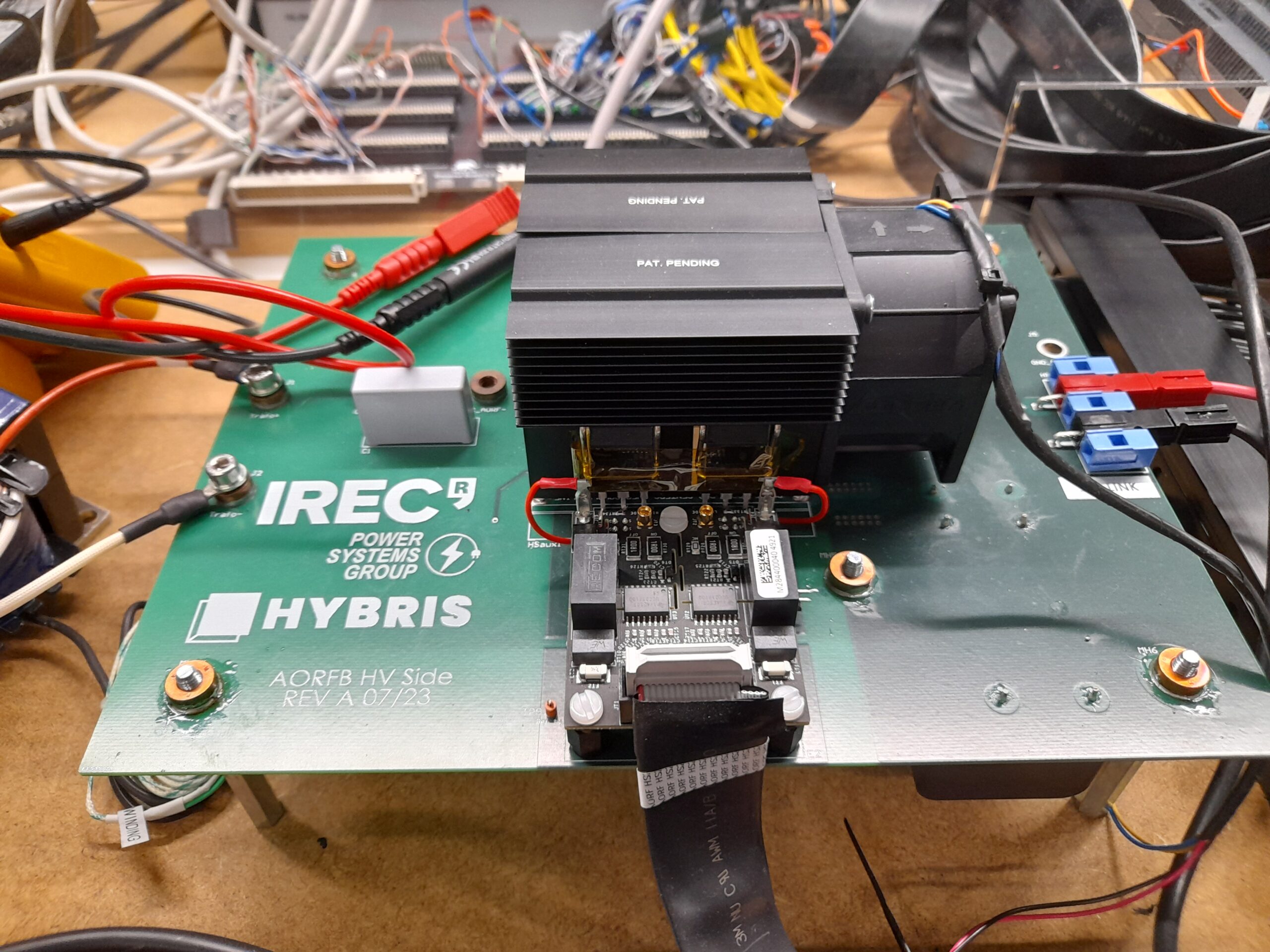
To facilitate the deployment of the hybrid system at multiple demonstration sites, a prototype was designed to be portable within a container. This system included all the necessary components, such as battery modules, power converters, control systems, and safety mechanisms.
In a final step, HYBRIS demonstrated battery system performance at a small energy community in Messina managed by Solidarity and Energy, with several PV panels and an ESS already installed. The primary intention of this case study was to validate the capability of the HESS storage to increase the energy storage capabilities on site, increasing the self-consumption of PV energy and avoiding power outages.
During the project, the IREC researchers Àlber Filbà and Clàudia Cabré co-authored a white paper entitled “Unlocking versatility in power converter prototyping with TyphoonHIL“, which provides a functional overview of the IREC’s application of a simulation software that integrates Model-in-the-Loop in early design stages. This was implemented in Typhoon HIL Inc.’s HIL404 unit, serving as a real-time simulator in early stages of development and as a controller for the PCS in later prototype implementation. The feasibility of this approach was demonstrated through simulation and experimental results.
More recently, a YouTube video of the project was released, summarizing the HYBRIS project achievements:
The HYBRIS project (Grant Agreement No. 963652) is part of the Horizon 2020 research program funded by the European Union. The consortium is formed by 15 European partners, including IDP (leader), LOMARTOV, IREC, COMET, GESINCO or HESStec.
